


Microsoft's revenue grows, but the storage crisis makes data centers pricier
Microsoft's business figures exceed expectations, only Windows and Xbox are stagnating. Rising storage prices are enormously increasing investment costs.
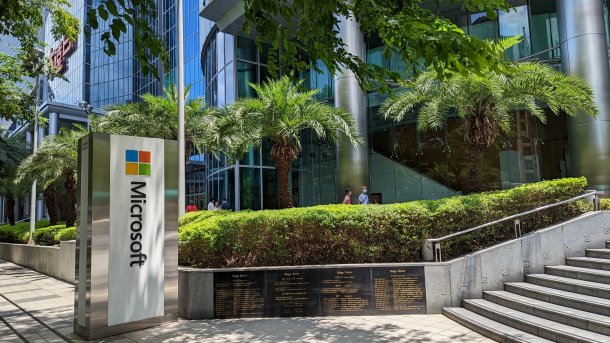
Microsoft company sign on a street in Taiwan
(Image: Frank Schräer / heise medien)
Microsoft was able to further increase both revenue and profits in the past quarter. As usual, the cloud business recorded the highest growth rates, which Microsoft CEO Satya Nadella attributes to the increasing demand for AI services. The downside: Storage prices have therefore risen significantly recently, which also affects Microsoft's data centers. Investments for the current year are expected to be significantly higher than anticipated, with a large portion attributed to rising component prices.
In the third quarter of fiscal year 2026, which ended in March, Microsoft generated revenue of 82.9 billion US dollars. This is an increase of 18 percent compared to the same period last year, when Microsoft had recorded higher profits than expected. This is also the case now, as market observers had recently expected 81.39 billion dollars. Microsoft itself had also expected a maximum of 81.75 billion dollars and an increase of almost 16 percent at the end of January due to a weaker cloud outlook.
AI business grows significantly
Microsoft's operating profit rose by 20 percent to 38.4 billion dollars in the first three months of 2026 compared to the previous year, while net profit even increased by 23 percent to 31.8 billion dollars. Management attributes this to the AI boom. “Our AI business surpassed an annual revenue run rate of $37 billion, up 123% year-over-year,” explained Satya Nadella in the company's press release. This includes cloud customers using AI services as well as revenue from Microsoft's own AI tools.
Videos by heise
Thus, the cloud business continues to be the group's revenue driver. Microsoft was able to increase revenue here by 29 percent compared to the previous year to a total of 54.5 billion dollars. The revenue from the so-called “intelligent cloud,” including Azure, even grew by 30 percent and, at 34.7 billion dollars, represents the largest part of the cloud business.
More Copilot users and higher investment costs
In addition, Microsoft was able to further increase the user numbers of Microsoft 365 Copilot, the AI assistant for cloud office, which had already been booked by 15 million M365 subscribers in the previous quarter, now stands at 20 million Copilot users. “Weekly engagement is now at the same level as Outlook as more and more users make Copilot a habit,” Nadella said according to CNBC in conversation with investors. And the number of Copilot users is expected to continue to rise in the current quarter.
Microsoft's investments in infrastructure are also expected to increase, but not only voluntarily. Microsoft CFO Amy Hood forecasts investment costs of 190 billion dollars for the full year, expecting impacts of 25 billion dollars from higher component prices. Industry experts had expected annual investments of 154.6 billion dollars.
PC & Xbox businesses decline, forecast mixed
The business with PC and gaming products, on the other hand, continues to stagnate. Revenue from Windows licenses and devices decreased by 2 percent, while Microsoft even recorded a decrease of 5 percent in Xbox content and services. This continues the negative development of the Xbox division. At least revenue from internet search (Bing) and news advertising increased by 12 percent. Revenue from the professional network LinkedIn also continued to grow, namely by 12 percent, with Microsoft attributing this to the cloud division.

For the current fourth fiscal quarter of 2026, Microsoft forecasts revenue between 86.7 and 87.8 billion dollars, which is slightly below market observers' expectations. However, the growth of the Azure cloud is expected to exceed the 37 percent increase expected by analysts with 39 to 40 percent. The stock market reacted mixed to these figures. Initially, Microsoft's share price shot up after the stock market closed, but then quickly fell into negative territory. Most recently, the stock was around 0.3 percent below the opening price of this day.


(fds)

