


Deutsche Telekom tests Bitcoin mining with surplus solar power
Solar power is not always generated when it is needed. A Deutsche Telekom subsidiary is working with partners to test whether it can be used to mine bitcoins.
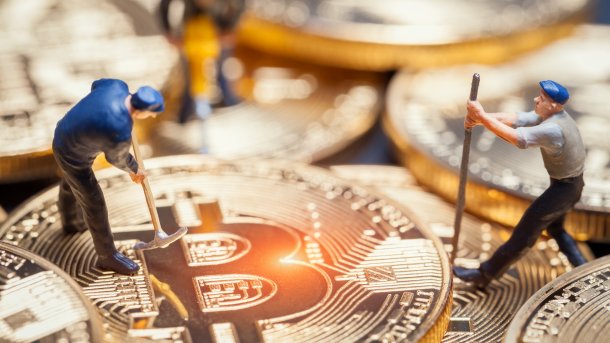
(Image: Morrowind/Shutterstock.com)
Deutsche Telekom subsidiary Telekom MMS and Bankhaus Metzler are testing the use of surplus solar power for Bitcoin mining in a project. The partners refer to this as "digital monetary photosynthesis". Specifically, containers with mining hardware are being set up at another project partner, the metal construction company Riva in Backnang, Baden-Württemberg. The electricity comes from Riva's own solar systems. The test is intended to gather data and findings for the planning of subsequent projects.
According to the press release, the project partners are interested in electricity from renewable sources that would otherwise remain unused due to insufficient grid feed-in options or a lack of storage options. "With the growing number of renewable energy sources and the resulting fluctuations in available energy, the need for quickly available balancing power is increasing. For this, we need mechanisms that can react quickly to changes and absorb fluctuations", Oliver Nyderle explained, who works as Head of Digital Trust & Web3 Infrastructure at Telekom MMS.
"Regulatory effect" of Bitcoin mining
Bitcoin miners could have a "regulating effect" on the energy grid and convert surplus energy into digital values, said Nyderle. This could also protect the grid from stressful energy fluctuations. Wind power and photovoltaic plant operators could also benefit from this. This is already being practiced in countries such as the USA and Finland. The partners now want to use the project to demonstrate the benefits in Germany too.
Videos by heise
Mining refers to the power-hungry hash value calculations that participants in the Bitcoin network have to carry out when they wish to create a new block for the cryptocurrency's blockchain. Anyone who creates a new block with transactions that is recorded as valid in the decentralized blockchain ledger can currently collect 3.125 fresh Bitcoin (equivalent to 200,145 euros) as a reward. Bitcoin has long been criticized for its CO₂ emissions; mining often uses electricity from fossil fuels, which is not very climate-friendly.


(axk)


