


30 years of PlayStation: Sony takes the wheel
The PlayStation is launched in Japan on December 3, 1994. Sony relegates Nintendo and Sega to – and continues to set the tone to this day.
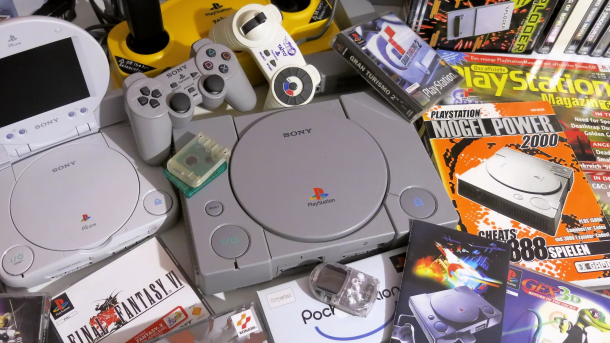
What accumulates over 30 years – The PlayStation has created its own gaming ecosystem, including media and accessories.
(Image: René Meyer)
While these days you might be considering whether to put the expensive PS5 Pro under the Christmas tree, 30 years ago the decision was much simpler: if a console, then Sony's brand new PlayStation! In the first thirty years of digital gaming, every decade had one console, one brand that defined it. In the seventies, it was Atari. In the eighties, it was Nintendo. And in the nineties it was the Playsi. The PSX. The code name, like a battle cry.
It is the first console to sell 100 million units. With games like "Ridge Racer", the outsider Sony overtakes the veterans Nintendo and Sega and becomes the market leader, which later also encourages Microsoft to develop a console. The Nintendo generation of the 1980s has grown up; and it finds a grown-up console in the PlayStation. With fast 3D graphics and cool sound.


Anime and manga such as "Sailor Moon", "Dragonball" and "One Piece" became internationally successful in the nineties – and aroused curiosity to find out more about Japanese culture.
Videos by heise
Many did not want to wait for the PlayStation to come to Germany in September 1995. Some even flew to Japan to get a console and games. The Internet makes it easier later on: mail order companies such as Lik-Sang, based in Hong Kong, ship all over the world. There are so many reasons for importing: the American and Japanese TV standard NTSC runs at 60 hertz, the European PAL at 50. Many games come much later or not at all, or are poorly implemented or cut or indexed (like "Resident Evil 2"). Import professionals have games sooner and better – and make fun of the "Palis", which stands for the European television system "PAL".
Playstation One – Hardware und Screnshots (80 Bilder)
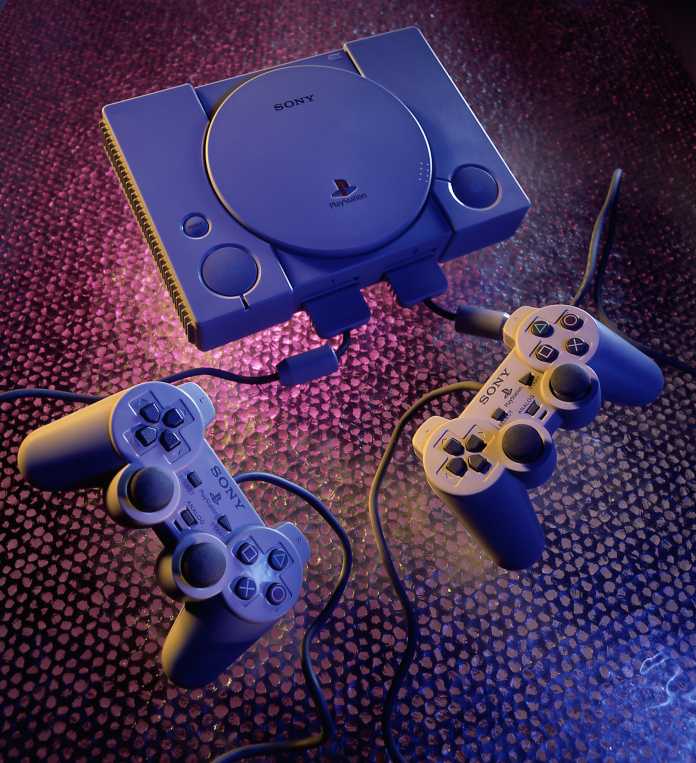
Sony
)Sounding silver disks
The PlayStation is not actually particularly innovative, as the equivalent Sega Saturn is released just a few days earlier. But it does everything right. It is offered at a competitive price – 299 dollars in the USA; in Germany initially 599 marks, later 399. It is a pure gaming machine, not one of the many multimedia players introduced at the time for photos, movies and encyclopaedias.

The heady space of a CD-ROM, which was only slowly establishing itself on the PC at the time, with flagship titles such as "Rebel Assault", was used for other things: for better and more beautiful games. With voice output, video sequences and audio tracks. Many discs can be inserted into a CD player and listened to independently of the console. And it's worth it, because for the first time you can embed well-known artists faithfully into the games. For example, the Chemical Brothers and The Prodigy in the "WipeOut" series. It is convenient that the Sony Group also owns a record company.
Music games only became a genre in their own right on the PlayStation. Think of the cute "Parappa the Rapper", "Beatmania" with its turntable controller and, of course, "Dance Dance Revolution" with a dance mat. "Guitar Hero" and "DrumMania" add guitar and drums.

(Image: Sony Computer Entertainment)
The decisive advantage of a CD-ROM over a plug-in module for the players should not be swept under the carpet: It can be easily copied. The console checks whether a game is an original, but you can quickly find solutions to outsmart the test. For the first revision with the "swap trick": you place an original in the console and replace it with a copy after the check. Later with a "mod chip", which numerous service providers install for little money and which ensures that the console reads copies. It is both a curse and a blessing that many people buy a PlayStation because the games are, well, because the games are free. Provided you have access to a CD burner and PC, which were still expensive at the time.


