


Too little demand for gas: LNG terminal in Wilhelmshaven at a standstill
When the gas supply was in crisis, everything had to happen quickly. Now the first LNG terminal has been forced to take a break – in winter of all times.
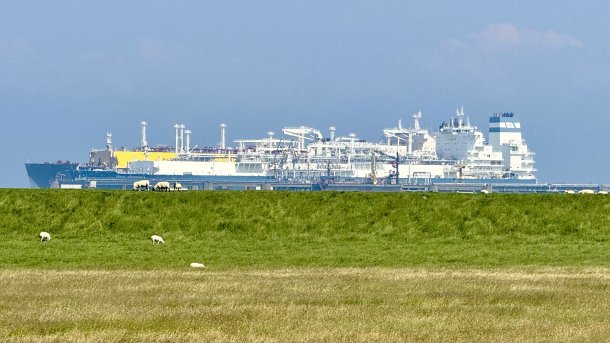
A picture from better times: An LNG tanker unloads its cargo at the special purpose vessel (FSRU) "Höegh Esperanza" in Wilhelmshaven in June 2024.
(Image: mki / heise online)
In the middle of the heating season, Germany's first liquefied natural gas terminal in Wilhelmshaven will cease operations for several months. The announcement came in the form of sober status information on an information platform of Gas Infrastructure Europe, a portal for gas plant operators. It states that the terminal will be out of operation from January 5 to April 1, 2025. The reason: the capacity has not been marketed – and the terminal will therefore remain unused. Usage is said to have already declined noticeably in recent months.
There are different accounts of the reasons for this step. The specialist service Energate cited the terminal and grid fees as a possible cause, which are higher in the German terminals than in other European ports that have been exempted from regulation. LNG suppliers such as the USA have therefore preferred to sell their LNG to other countries, experts conclude. A spokesperson for the operating company Deutsche Energy Terminal (DET) told the Wilhelmshavener Zeitung that it is now important to "define a framework for further marketing that is accepted by the market".

Minister: LNG terminal remains important
Lower Saxony's Economics Minister Olaf Lies (SPD), on the other hand, told NDR that the reason for the pause was the drop in gas consumption. This was significantly lower than in previous years. In addition, there is more gas available, which is transported via pipelines. This is cheaper to transport and therefore costs less than the cryogenic liquid natural gas, which first has to be regasified by the special ship "Höegh Esperanza". However, the LNG terminal is still necessary in order to guarantee supply and in view of future plans to import so-called green gas.
Videos by heise
The terminal in Wilhelmshaven was put into operation at the end of 2022 after less than a year of construction. The centerpiece is the floating special ship, which is why it is referred to as a floating terminal. The project was driven forward with exemptions due to the fact that gas imports from Russia had largely ceased. However, it was also helpful that plans for a terminal in Wilhelmshaven had been in place for some time and that an existing discharge bridge could be used, which helped to speed things up considerably. There were fears of bottlenecks in the gas supply at the turn of 2022/2023. In addition to Wilhelmshaven, there are other terminals operated by the state-owned DET in Brunsbüttel and Stade. A fourth terminal is currently under construction – but will be delayed until next year. The terminal in Wilhelmshaven has a grid feed-in capacity of 4.7 billion cubic meters.


(mki)

