


Customized 3D-printed robot swarms for mine clearance and rescue operations
Depending on the intended use, scientists want to print robust swarm robots on demand on a large scale. This has already been achieved.
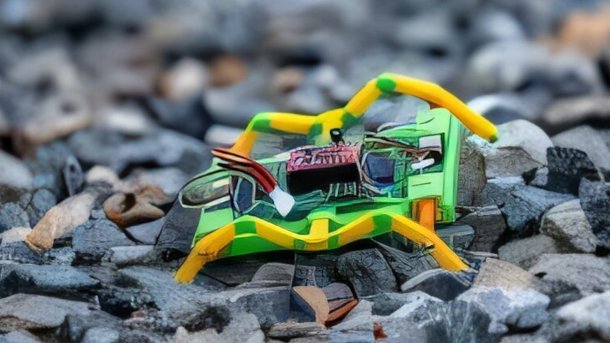
The quickly printable prototype of a robust swarm robot.
(Image: Nitin Sanket)
Markus Nemitz, assistant professor at Tufts University, has a vision: he wants to use a 3D printer to print robots for their specific area of application. The robots will then perform their tasks together in swarms and help to clear landmines, carry out rescue missions, combat agricultural pests or monitor the environment. The soft robots are designed to be virtually indestructible.
Nemitz has been working on swarm robotics for several years. The problem is that there are no available real robot swarms consisting of hundreds or thousands of robots with which swarm intelligence algorithms can be tested. Researchers usually make do by testing their swarm algorithms in simulations. Nemitz has been looking for a method to produce as many physical robots as possible in the shortest possible time, at low cost and in a way that can be specially adapted to the intended application.
Nemitz, his doctoral colleague Cem Aygül and other researchers have now designed a robust robot that can be created in a few hours in almost one go using a 3D printer, as they write in “A framework for soft mechanism-driven robots”, which has been published in Nature Communications. The scientists thus kill two birds with one stone: they shorten the manufacturing time when using several 3D printers and reduce costs at the same time.
Robust, soft robot
The robot that the researchers have developed consists of semi-soft limbs and soft joints. The design is similar to the structure of the limbs of mammals and reptiles. Bone structures are connected by softer elements lined with cartilage. The advantages of this design are that the joints have a greater range of motion that extends beyond the plane of rotation. The robot can also physically adapt better to the surface in rough terrain without having to perform complicated movement patterns. The robot is also much more robust.
Nemitz says that you could drop her robot from a helicopter or have it run over by a car, and it would “still get up and keep going”. This lays the foundations for creating robust robot swarms that can also be used outside the laboratory and “have a high survival rate”.
Videos by heise
The 3D printing of the robots can be done on-demand. The 3D printers used can apply materials of different strengths to create harder and softer skeletal structures in a single printing process. The robot electronics are currently still installed manually during the printing process. According to the scientists, however, this could also be automated.
The robots can be customized depending on their intended use, says Nimitz. For example, it would be possible to quickly print robots with novel combined properties that can move in various complex environments and transport food or relief supplies, or use special sensors to locate mines or biological pests.
Nemitz's laboratory is already working on corresponding additions for such specific applications, such as clearing landmines, rescue missions and environmental monitoring.



(olb)

