


GeForce RTX 5090: Nvidia has apparently messed up the power supply
The GeForce RTX 5090 runs up to 575 watts over a single phase. Safety mechanisms are missing.
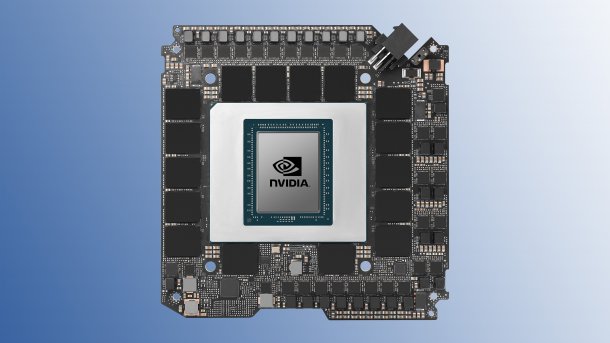
Tightly packed PCB of the Nvidia GeForce RTX 5090 Founders Edition. At the top right (under the J2 identifier) is the single shunt resistor through which the entire current flows.
(Image: Nvidia)
Form over function was apparently the motto for the design of the GeForce RTX 5090 Founders Edition and its predecessor, the GeForce RTX 4090. Starting with the 4000 series, Nvidia has simplified the power supply to such an extent that the design favors melting connectors. References to user fault seem too short-sighted.
Since the RTX 4000 series, the graphics chips have only been supplied with power via one phase. Although the current flows to the graphics card via six 12-volt wires with the 12VHPWR connector and its revision 12V-2x6, it is then combined into a single line on the GeForce graphics cards. This saves space on the ever-shrinking circuit boards, but reduces safety.
The graphics cards therefore have no chance of compensating for uneven currents on the six lines. This is highlighted by the YouTube channel "Actually Hardcore Overclocking", which gained notoriety through circuit board analyses.
Empfohlener redaktioneller Inhalt
Mit Ihrer Zustimmung wird hier ein externes YouTube-Video (Google Ireland Limited) geladen.
Ich bin damit einverstanden, dass mir externe Inhalte angezeigt werden. Damit können personenbezogene Daten an Drittplattformen (Google Ireland Limited) übermittelt werden. Mehr dazu in unserer Datenschutzerklärung.
High temperatures due to uneven load
In extreme cases, a GeForce RTX 5090 would still run even if five of the six 12-volt wires were completely disconnected. More than 500 watts could then flow through a single line. The graphics card only recognizes whether power is coming in or not.
The basic problem is that electricity follows the path of least resistance. A worn or bent pin or a bit of dirt in the plug is enough to increase the internal resistance and thus influence the distribution.
A video by Roman "der8auer" Hartung underlines how significant the effects can be. At full load, he measured 20 amps on a single wire, i.e. 240 watts – the specification provides for up to 9.2 amps (110 watts). According to the thermal imaging camera, the plugs were well over 100 degrees Celsius. Other wires only transmitted a fraction of this. It is unclear how such high differences come about. Hartung checked the fit of the plugs several times.
Empfohlener redaktioneller Inhalt
Mit Ihrer Zustimmung wird hier ein externes YouTube-Video (Google Ireland Limited) geladen.
Ich bin damit einverstanden, dass mir externe Inhalte angezeigt werden. Damit können personenbezogene Daten an Drittplattformen (Google Ireland Limited) übermittelt werden. Mehr dazu in unserer Datenschutzerklärung.
Andreas Schilling from Hardwareluxx measured the biggest difference as 3 amps on one wire and 10 amps on another. Although the plugs appeared to be seated correctly, the distribution was only even after the cable had been reconnected. We have not yet noticed any such problems with our Zotac sample.
Regression in the design
With the GeForce RTX 3090 Ti, Nvidia still relied on three phases –, each with two 12-volt wires. This meant that there was at least a rudimentary load distribution and the design was better at preventing crooked plugs: If two wires on one phase had no contact, a GeForce RTX 3090 Ti would not run.
Reports of melting power connectors therefore only increased with the GeForce RTX 4090. The danger is even greater with the GeForce RTX 5090 because Nvidia has increased the maximum electrical power consumption from 450 to 575 watts. Cables and connectors therefore run even closer to the specified maximum. The safety cushions are small.
Videos by heise
Nvidia also provides partner manufacturers with basic rules for the power supply, which is why there are problems with all models of the GeForce RTX 5090. Theoretically, the smaller models such as the GeForce RTX 5080 are also affected, but the risk is considerably lower there due to the lower electrical power consumption.
Asus partially avoids the problem with its ROG Astral GeForce RTX 5090: Before the initial single current phase, there is apparently a block of six shunt resistors with sensors that measure the current flow across each individual wire. Asus' Windows tool GPU Tweak displays the ampere values individually and warns of an uneven distribution. However, the PC does not switch off automatically.
Empfohlener redaktioneller Inhalt
Mit Ihrer Zustimmung wird hier ein externer Preisvergleich (heise Preisvergleich) geladen.
Ich bin damit einverstanden, dass mir externe Inhalte angezeigt werden. Damit können personenbezogene Daten an Drittplattformen (heise Preisvergleich) übermittelt werden. Mehr dazu in unserer Datenschutzerklärung.


(mma)


