


Microsoft is putting the brakes on the expansion of its own data centers
Microsoft is reportedly slowing down its plans for new data centers from Australia to London and Chicago. The reasons are unclear and probably complex.
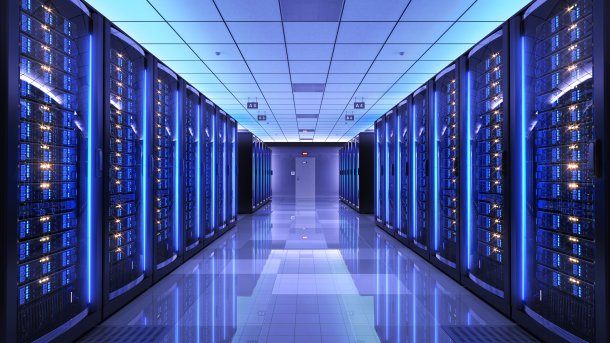
(Image: Sashkin/Shutterstock.com)
The new data centers planned by Microsoft, or even their expansion, are apparently currently being scaled back somewhat. Projects all over the world are affected. This was reported by the financial service Bloomberg, citing people familiar with the matter. In individual cases, this is likely to be due to local conditions and contractual partners, but as data centers at many different locations on different continents are affected, it is assumed that there has been a change in strategy.
It was only at the beginning of this year that Microsoft announced that it would be investing 80 billion US dollars in AI data centers this year. Even at that time, there were already signs of a change of government in the USA, meaning that a large part of the budget was to flow into facilities in the United States. However, the company is apparently no longer in a hurry to invest in these locations either. According to Bloomberg, Microsoft has recently either stopped or delayed talks about new data centers or their expansion in Indonesia, Australia, the UK and the US states of Illinois, North Dakota and Wisconsin.
Microsoft confirms changes to plans, does not provide details
As with many construction projects, this could be due to problems with the electricity connection or supply as well as bottlenecks in building materials, which can be resolved after a certain amount of time. However, some investors interpret this development as a sign that the expected demand for AI services no longer justifies Microsoft's extensive data center plans.
Videos by heise
When asked, Microsoft confirmed changes to its data center plans, but declined to comment on individual projects. "We plan our data center capacity needs years in advance to ensure we have sufficient infrastructure in the right places," the company said. "As demand for AI continues to grow and our data center footprint continues to expand, the changes we have made demonstrate the flexibility of our strategy."
Negotiations for new locations halted
Microsoft recently withdrew from negotiations to lease space between London and Cambridge in the UK, even though cloud servers with Nvidia's latest AI chips could be placed there. At almost the same time, Microsoft reportedly broke off negotiations in the USA for data center space near Chicago in the US state of Illinois.
In addition, the start-up CoreWeave, which has close ties to Microsoft and earns its money with cloud data centers for the training and execution (inference) of AI models, has announced that the company will not be booking any of the additional capacity previously offered. CoreWeave would not comment on the scope of the projects, but explained that the capacity had been sold elsewhere.
Construction work slowed down
In other cases, Microsoft is delaying the completion of new data centers. For example, the company has suspended work on some parts of a new data center campus near Jakarta in Indonesia. The planned expansion of a site in Mount Pleasant in the US state of Wisconsin has also been put on hold. The company has so far spent 262 million dollars on construction work there.

Microsoft disagrees and has pledged its full support for the 3.3 billion dollar project in Wisconsin. The data centers there are to be put into operation next year and the preparatory work for the expansion has begun. Microsoft in Indonesia did not want to comment on the pause in construction work in Jakarta, but the cloud infrastructure there should be available in the second quarter of this year as planned.
Some observers have been sceptical about the expansion of data centers for AI purposes since Deepseek stirred up the AI scene. This is because the large language model from China is supposedly particularly efficient, meaning that artificial intelligence is also possible with less computing capacity. It is also expected that Western AI models will also become more efficient over time and therefore require fewer resources in the future.


(fds)

