


More training and certificates for Kubernetes and more cloud for the EU
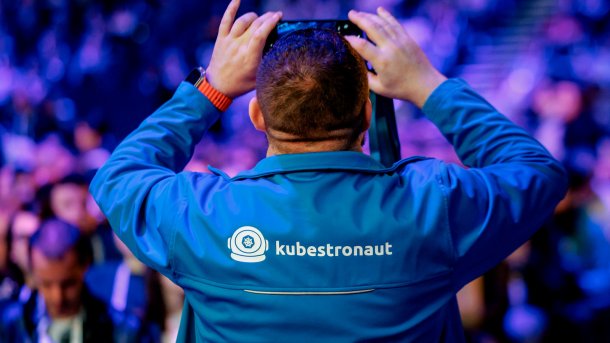
News from Kubecon: With enough certificates, you can become a "Golden Kubestronaut". And a new EU cloud initiative is also coming.
(Image: CNCF)
- Udo Seidel
At this week's KubeCon EU in-house exhibition in London, there was some news in the cloud-native world. Number one is in the area of further training: there is now the "Golden Kubestronaut" award. To achieve this, you have to successfully complete a total of 14 individual courses.
The little brother of this award, the "Kubestronaut", has been around since 2024, for which you only have to collect 5 individual certificates. However, according to the Cloud Native Computing Foundation (CNCF), around 1,500 users have already successfully completed this – in Germany over 80. Apparently, the demand for these certificates and awards is quite high. The CNCF is giving the Golden Kubestronauts a backpack, a jacket, a lifetime 50 percent discount on KubeCon tickets and other benefits.
New training for Unix professionals
The Foundation is also expanding its existing training program. A new addition is CODE (Certified Open Developer for Enterprise Code). CNCF, the Linux Foundation and the Opensource Initiative (OSI) are working together on this program. This program is intended to provide developers who work for large companies and corporations with the necessary knowledge for open source projects. The primary target group are IT professionals who are still working with Unix and other traditional systems and would like to make the step into the cloud-native world.
The CODE exam costs 250 US dollars and you can afford one failed attempt. And there are also new certificates in existing training programs: Certified Cloud Native Platform Engineering Associate (CNPA) and Cloud Native Platform Engineer (CNPE). Incidentally, there are seven CNCF training partners in Germany and 12 in the DACH region.
EU and Linux Foundation cloud initiative
The new NeoNephos project is interesting. Put simply, this is an initiative that aims to significantly promote and support the cloud, digital sovereignty and modern technologies such as Kubernetes in Europe. It is backed by the Linux Foundation and the European Union. For the latter, the keywords are Project of Common European Interest (IPCEI) and Next Generation Cloud Infrastructures and Services (CIS).
Those familiar with the scene may immediately think of the Gaia-X project. What's the difference? Why should NeoNephos work better and faster? One key difference is that there are simply already existing cloud providers and software projects as part of Neonephos. These are, for example, the Debian-based Garden Linux or the German cloud StackIT.
Videos by heise
Another distinguishing feature is, of course, the involvement of the Linux Foundation as a whole. It has a very strong interest in projects with and within the EU. Since 2022, there has even been a legally independent sister based in Brussels: the Linux Foundation EU.
A patron for the Openinfra Foundation
And there is even a third aspect: the Openinfra Foundation –, known for its open-source cloud implementation –, will be slipping under the patronage of the Linux Foundation in the near future. Both supervisory bodies have already agreed to this. Now all that remains is paperwork.
In an interview, Jonathan Bryce, head of the Openinfra Foundation, said that there have been many more requirements in recent years with regard to regulation and geography-specific laws. The Linux Foundation has already invested a lot of time and money here and is well positioned accordingly. Now Openstack and co. could benefit directly from this. In fact, the idea of cooperation at this level is 15 years old. But in 2010, it simply wasn't a good fit and both sides still needed to develop considerably.


(dahe)


