


In 3D and without language barriers: video calls like a personal conversation
Google Beam is designed to make video conferences feel as if you are sitting in the same room and speaking the same language.
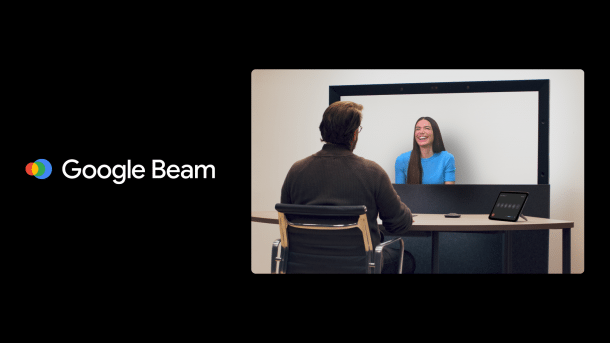
(Image: Google)
Live translation has long been a popular feature on Android smartphones and Pixel Buds headphones to overcome language barriers on vacation or business trips. Now the interpreter function is being improved in Google Meet. From now on, video calls in the USA can be translated in real time from English into Spanish and vice versa. Unlike the previous live translation, the tonality of the language and the emphasis of the words will not be lost, but will be imitated by the AI. The function will also be activated in other countries and for other languages over the course of the year.
Empfohlener redaktioneller Inhalt
Mit Ihrer Zustimmung wird hier ein externes Video (TargetVideo GmbH) geladen.
Ich bin damit einverstanden, dass mir externe Inhalte angezeigt werden. Damit können personenbezogene Daten an Drittplattformen (TargetVideo GmbH) übermittelt werden. Mehr dazu in unserer Datenschutzerklärung.
Google also wants to offer the translator in the professional environment and is going one step further there for stationary video conferences: since coronavirus, working from home and hybrid working have become established and video conferences have increased as a result. However, many find such meetings impersonal and tiring. Google Beam aims to create an atmosphere as if you were sitting together in the same room.
Videos by heise
Originating from Project Starline, which Google presented at Google I/O 2021, Beam uses special hardware for this purpose. 3D screens are used, which are equipped with several cameras in the display frame that film the conversation partners spatially and from different angles. Google apparently uses autostereoscopic displays, as the participants should be able to see themselves spatially on the screens without having to put on 3D glasses. Google promises that Beam works with low latency so that the conversations feel natural and you can maintain eye contact and perceive body language just like in a real conversation.
Google has brought HP on board for the hardware and plans to launch the first Beam devices on the market next year. The company has not yet revealed in which countries and at what price.


(spo)


