


Aldebaran insolvency process: Universities fear continued use of Pepper robot
The insolvency proceedings at Aldebaran Robotics could have an impact on robot research worldwide. Pepper robot could soon become unusable.
(Image: MikeDotta/Shutterstock.com)
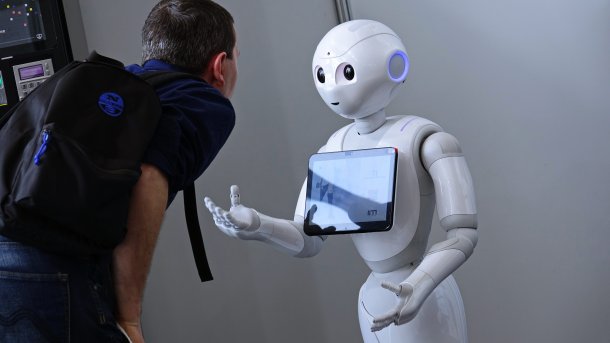
The insolvency proceedings initiated in February 2025 by the French robotics company Aldebaran Robotics are causing increasing concern among universities around the world. They fear that the humanoid Pepper robots they have purchased could soon become unusable if Aldebaran is unable to continue operating the necessary AI cloud. The repair of the Pepper and Nao robots, some of which are vulnerable, would then also be at risk.
It is still unclear what the future holds for Aldebaran. The company filed for insolvency in mid-February 2025 after accumulating debts of 150 million euros since 2019. The insolvency administration has not been idle since then: Half of all employees have been made redundant and the company is being restructured. The small humanoid robot Nao, of which Aldebaran has sold around 20,000 units to date, will continue to be produced. In addition, the wheeled service assistant Plato will continue to be produced.
The humanoid Pepper has not been developed any further since 2021 and sales were stopped in 2024. The sales figures of 17,000 in total have fallen short of the company's expectations. However, Aldebaran has so far maintained support for Pepper. Many of the customers who have purchased Pepper are universities worldwide. The reason: the robot can be set up quickly, is therefore easy to use for research purposes and was also affordable at a price of 17,000 to 20,000 euros.
No repairs, no AI cloud
However, with the dismissal of employees and the introduction of further cost-cutting measures, support for the Pepper robot is on the brink. Universities fear that the repair of the robots will be discontinued. The problem: Pepper is not necessarily one of the most durable robots. Overheating issues occur time and again, leading to failures and forcing cool-down phases of up to 30 minutes, which impairs the smooth execution of experiments.
Pepper's rigid plastic shell has also proven to be fragile, meaning that the robot has to be sent back to Aldebaran or an authorized dealer from time to time. There is now a risk that repairs will soon no longer be possible, and the robot will become expensive electronic waste.
There is also the issue that the use of Pepper is linked to the company's own AI cloud network. The robot must have access to it to operate. If this is not possible, it will not work. The company's ongoing payment difficulties could mean that the AI cloud can no longer be operated.
Videos by heise
There are already initial signs that Pepper's support is coming to an end: Aldebaran has discontinued software updates. Any bug fixes and improvements are no longer expected, which makes it difficult to use in the university sector.
The smaller humanoid Nao robot, which is used for robot soccer, for example, does not appear to be affected for the time being. It will continue to be built, sold and receive support. Aldebaran is currently working on a successor. The current Nao is also vulnerable, tends to overheat, and the housing parts are sensitive.
It is currently unclear how big the impact on universities would be if Pepper were to fail. However, it is clear that universities need to seek an alternative as quickly as possible, but one that is not too expensive.



(olb)

