


Opera launches Neon, an AI browser on the market
Opera Neon is designed to understand the user's intentions and take over tasks. To do this, the browser has an integrated AI agent.
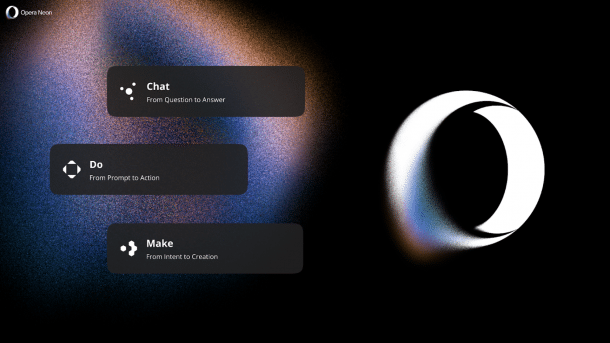
Opera Neon
(Image: Opera)
Opera Neon is intended to be more than an AI agent, namely a genuine agent-based AI browser. Originally, Opera had already presented an AI agent as a browser operator. It was to be integrated into the normal browser. You can still chat with the AI agent in Opera Neon, but what's new is that the AI browser can take on more extensive tasks, and you can send it to search for you.
Videos by heise
According to Opera, Neon performs most tasks locally in the browser – to ensure privacy and security. However, a press release also states that Opera uses AI agents that work outside the browser – in a virtual machine hosted in the cloud, and only in Europe. These agents should then be able to continue working even if the clients go offline. For example, Opera says, people can “ask the browser to create a game, a report, a snippet of code or even a website.” It is also possible for Opera Neon to process several tasks simultaneously.
Opera Neon with its AI engine
Initially, the AI agent browser is available via a waiting list. It is a premium subscription product, so it will obviously not be made available for free. We do not yet have access. In a preview, the browser looks stylishly dark, and in the sidebar there are options to chat with the AI agent or have it do something. Opera distinguishes between “Do” and “Make”. Do stands for the browser operator, which can understand websites and fill out a form, for example. Make, on the other hand, is a separate AI engine that works for the user, even when they are offline. The tasks are more comprehensive and are orchestrated.
Opera developed the AI engine itself – using the world's best models. It is not specified at this point which models these are. To understand a website, Opera Neon does not use screenshots and pixels, as many AI agents do, but the document object model structure. This determines how the layout of a website looks.
Opera also points out that they had already released a browser called Opera Neon in 2016. In fact, many elements from back then have been incorporated into the new AI agent browser, such as the messenger in the sidebar and the split screen.
Other AI providers also want to offer AI browsers; OpenAI is working on this, as is Perplexity. At the same time, Google, for example, is integrating AI functions into Chrome.


(emw)


