


Goodbye Xorg: Ubuntu Desktop 25.10 only with Wayland
Ubuntu wants to remove support for the Xserver Xorg, traditionally used for Linux user interfaces, from its best-known distribution variant.
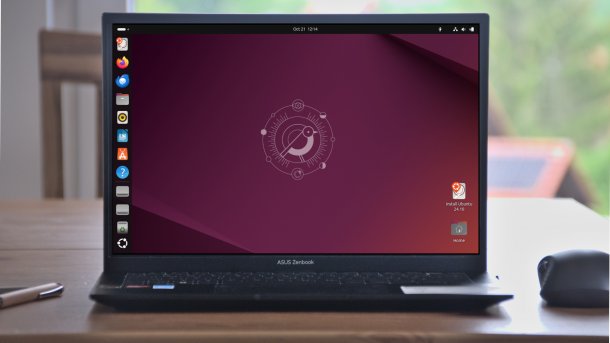
(Image: heise online / dmk)
Canonical plans to drop the Xserver Xorg in Ubuntu Desktop 25.10, so that the login manager and Gnome desktop will only run in the more modern Wayland mode. The distributor did not provide any information on the plans for other variants of the Ubuntu distribution family. Likely, however, the vast majority will continue as before for the time being, as Wayland support for other desktops is less mature, apart from KDE Plasma and Wayland-specific desktops.
When announcing this step, Jean Baptiste Lallement referred to the plans announced two days earlier to phase out Xorg at the Gnome Project. This will initially paralyze support for Xorg by default and then remove it six months later –. The latter will presumably take place with Gnome 50, which is expected in spring 2026, but possibly also with versions 49 or 51, which are scheduled six months earlier or later. Either way, Canonical wants to take this step with "Questing Quokka", which is equipped with Gnome 49: This is intended to allow developers half a year to improve Wayland support with the Ubuntu desktop before the release of the next Ubuntu version with long-term maintenance in April 2026.
X applications continue to run, but shortcomings are known
If Canonical sticks to its plan, Ubuntu Desktop will bid farewell to the X server, which has been used by Linux desktops to generate the user interface by default for around a quarter of a century, in October at around the same time as the workstation version of Fedora Linux. Thanks to Xwayland, however, X11 applications written for this server also run in Wayland mode on modern desktops.
Videos by heise
With Gnome, Wayland mode should also be able to satisfy the majority of users. However, as with technology changes in software, there are also some mostly rarer areas of application that the newer technology can only handle to a limited extent or not at all. Nvidia's proprietary graphics driver, for example, supports Wayland quite well these days, but currently only supports functions such as stereo rendering via GLX/EGL/Vulkan or Implicit SLI Mosaic with Xorg.



(wpl)

