


Summit declaration: G7 countries want to tackle the "energy challenges" of AI
The G7 countries have agreed to take a closer look at the enormous electricity consumption caused by AI and its potential for energy efficiency and innovation.
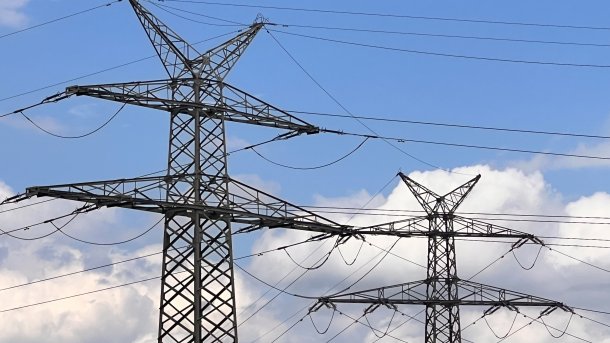
Electricity pylons in Bremen
(Image: heise online / anw)
The G7 association of major industrialized countries recognizes that the increasing introduction of artificial intelligence (AI) " will put increasing pressure on energy networks, create negative externalities and have an impact" on the security, stability and affordability of electricity supply. At the same time, however, the key technology could be used "to promote innovation in the energy sector and strengthen the resilience and reliability of our energy systems".
This is stated in a declaration on "AI for Prosperity" adopted by the participating heads of state at their summit in Kananaskis in the Canadian province of Alberta, which ended on Tuesday.
"We will work together on innovative solutions to tackle the energy challenges facing our economies," promised the heads of government of the USA, UK, Canada, Germany, France, Italy, Japan and the EU, with a particular focus on the areas of AI and data centers. The G7 members want to "meet their respective national and international commitments", for example to achieve climate targets. They also plan to support innovations that "improve the energy and resource efficiency of AI models" and optimize the operation of data centers.
Ministries to present work plans on AI and energy
The alliance has AI solutions in mind "to enable energy innovation and breakthrough discoveries", for example to optimize energy consumption. The signatories want to use artificial intelligence "to build secure, resilient and affordable energy systems and supply chains". All in pursuit of solutions that "mitigate negative externalities, create benefits for people and conserve our natural resources".
Another announcement reads: "We will work with trusted international partners to build and share knowledge and promote the development of AI skills and talent in the energy sector." The responsible ministers are to "present a work plan on AI and energy this year", which also includes cooperation with industry and the provision of "continuous data analysis".
Videos by heise
AI-related emissions can be easily shifted
In general, the G7 countries have identified "the potential of a human-centered approach" to AI in order to "increase prosperity, benefit societies and address pressing global challenges". To this end, they want to "accelerate the adoption of safe, responsible and trustworthy AI that benefits people, mitigates negative externalities and promotes our national security". As part of a G7 AI network with a separate roadmap, the identified risks are to be addressed in special laboratories for urgent solutions. The members also want to remove obstacles to AI in the public sector.
A new study conducted by the Federal Environment Agency together with the Infras research institute and the Roegen Center for Sustainability shows that the heads of government have not set themselves an easy task. According to the study, the growth of data centers for AI applications outside Europe poses the risk of "carbon leakage": AI calculations could therefore easily be relocated to regions with cheap, non-CO₂-neutral energy.
According to the analysis, AI-related energy consumption in data centers will increase to around 300 TWh by 2028. This corresponds to around one percent of global electricity consumption. The researchers write that a large proportion of this will be geographically flexible. This gives the IT industry enormous leeway when it comes to choosing a location. AI computing capacities are already predominantly concentrated in the USA and China – jurisdictions with less stringent climate regulations than in the EU. The expansion of renewable energies in AI-strong regions and compliance with the climate targets announced by big tech companies are therefore of great importance.


(vbr)


