


Microsoft throws Windows PowerShell 2.0 overboard
PowerShell 2.0 is already a few years old. Microsoft is therefore throwing it out of Windows and advises migration.
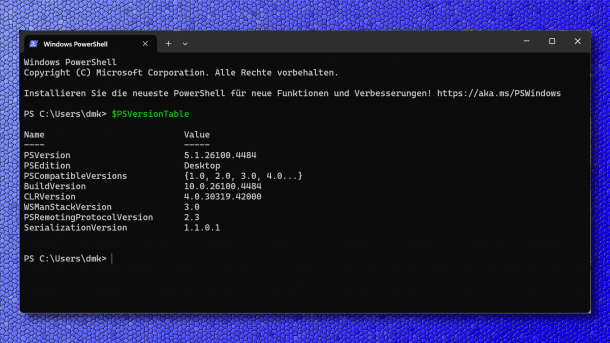
PowerShell is currently in version 5.1.
(Image: heise online / dmk)
A new entry has crept onto the list of discontinued Windows features. Windows PowerShell 2.0 will be removed from Windows. The reminder comes around eight years after the first announcement.

(Image: Screenshot / dmk)
On the list of discontinued features maintained by Microsoft, the “Deprecated Features List”, the manufacturer explains: “Discontinuation reminder: Windows PowerShell 2.0 is discontinued and will be removed in a future version of Windows. Applications and components should be migrated to PowerShell 5.0+”. Originally, Microsoft first announced the end of PowerShell 2.0 with the release of Windows 10 Build 1709, i.e., in 2017.
Well-established PowerShell version
Microsoft originally announced PowerShell 2.0 at the end of 2008, when the chief architect at the time, Jeffrey Snover, announced its integration into Windows 7, Windows 2008 R2 and Windows Server Core 2008 R2. It was also available as an add-on for Windows XP, Vista and Server 2008. After 17 years, Microsoft now wants to get rid of the old PowerShell version.
Videos by heise
The development of PowerShell itself, however, continues apace. Version 5.1 is currently available on many Windows systems, but PowerShell 7 has also been available as open source since 2020 –. Both versions can be run in parallel. Since the beginning of the year, Microsoft's programmers have been working with the community on version 7.6, which is currently available as “preview.2”.
There are no obvious instructions from Microsoft for migrating old scripts for PowerShell 2.0 to the current version of the administrator tool. However, admins should slowly start adapting and testing the previously used scripts to the new versions. At least for the migration from PowerShell 5.1 to PowerShell 7.x, Microsoft provides information on the changes, including in the methods and functions, in a support article.


(dmk)


