


Study Mode: OpenAI introduces learning mode for ChatGPT
Learning with ChatGPT will be even easier in future. The study mode explains the required result step by step.
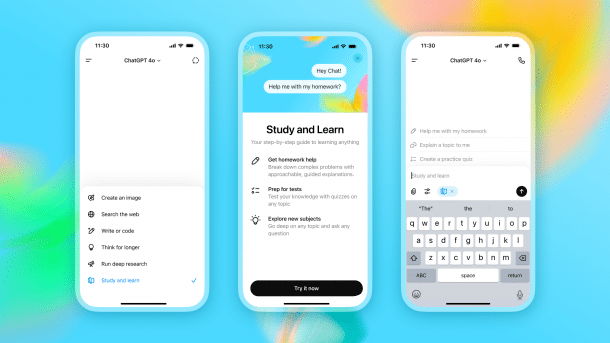
(Image: OpenAI)
Pupils, students, and simply interested people already use ChatGPT for learning. Now OpenAI is introducing a new learning experience, as the company announces. In Study Mode, the results are explained step by step. The aim is to achieve a more profound understanding.
The function is now also available in German, but you have to be logged in to use it. The study mode can also be used with a free account. Only in the coming weeks will people with an Edu account, i.e., a subscription from the education sector, have access.
Videos by heise
OpenAI writes in a press release that it asked itself how ChatGPT could support real learning instead of simply offering solutions without promoting the understanding of learners. The answer: the Study Mode. It is designed to be interactive, and you also get help when asking questions. Answers are given step by step, divided into subheadings depending on the question. You can go deeper at any point. If you like, you can also test your knowledge in a quiz. The mode is multimodal, so images can also be processed. heise online has received a demo of the mode. As usual with ChatGPT, the answers are polite, easy to understand, and comprehensible.
The memory function can also be activated on request. This means that even in learning mode, ChatGPT can remember the level at which a questioner needs an answer. For example, whether it is a biology student who has questions about a term paper or a high school graduate who requires more general help. Memory is ChatGPT's memory, which remembers facts when you want it to and incorporates them into each new question.
ChatGPT changes teaching
The Study Mode is based on customized system instructions that OpenAI developed together with teachers, scientists, and educators. “These instructions encourage basic learning behaviors such as active participation, managing cognitive load, promoting metacognition and self-reflection, curiosity, and providing helpful and constructive feedback.”
ChatGPT is already a great help for many learners, but teachers often still have to get to grips with the students' new skills. The assessment of homework, for example, in which an AI chatbot has now helped out, can no longer be graded using the same standards as in the days before ChatGPT and co. For learners, YouTube has also been a frequently used tutor for some time now. The education system must adapt to these new technical possibilities.



(emw)

