


Hybrid tariffs: Industry association calls for access to mobile networks
Deutsche Telekom now offers up to 500 Mbit/s via mobile for weak DSL users at no extra cost – sparking envy among its competitors.
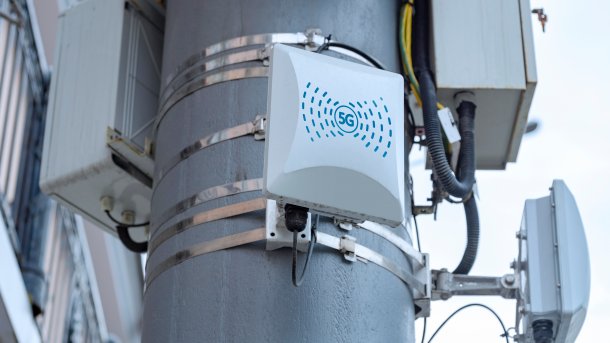
(Image: Lisic/Shutterstock.com)
Deutsche Telekom is advertising its new hybrid tariffs, which have been in force since the beginning of August, with "More speed for everyone – Combination of fixed and mobile network with up to 500 MBit/s". With such offers, the router switches the data rate of the mobile network to the fixed network as required. Even without a fiber optic connection, customers of the Bonn-based company will be able to use speeds of up to 500 MBit/s download and 50 MBit/s upload with MagentaZuhause Hybrid XXL. DSL connections with download rates of 16 MBit/s or 50 MBit/s could also "deliver up to 100 MBit/s almost nationwide" with Hybrid.
While Deutsche Telekom customers should be pleased with the reliability of the double Internet connection, competitors of the Magenta Group are skeptical. "Hybrid is the new vectoring," observers express concern regarding an old Deutsche Telekom marketing strategy. For a long time, it relied on copper-based VDSL with vectoring and only slowly switched to fiber optics.
The German Broadband Communications Association (Breko), for example, points out this parallel. Telekom bought itself time with vectoring, continued to market the existing copper infrastructure, and delayed the expansion of fiber optics, a spokesperson for the association complained to heise online. Now the company is trying to get even more out of the transmission technology, which is considered outdated, "by adding 5G". Considering such dumping offers, no one can be surprised at the restrained demand for fiber optics.
Customers who book the new hybrid tariffs during the current promotional phase even pay just one euro more per month for the required hardware, including the Speedport router and 5G antenna. The equipment can then be booked for eight euros per month.
Right of access to mobile communications infrastructure
Considering such bundled products, Telekom's dominant market position, and massive competition problems in mobile communications. Breko believes that its call to create a right of access to the active mobile communications infrastructure of large operators for service providers without their mobile networks at EU level has been confirmed. In a statement to the EU Commission on the planned Digital Networks Act (DNA), the association makes a concrete proposal: mobile network operators should have to grant all "reasonable requests" for access to mobile networks under "non-discriminatory, fair and reasonable conditions".
The member states could formulate "detailed requirements" for the procedure and participate in the design of "fair and reasonable conditions, including prices". It must be ensured that mobile network operators have "a fair chance" to cover the costs they demonstrably incur. Reasons for exclusion could include national security or the integrity of existing networks.
Videos by heise
Merging fixed and mobile networks
"The increasing technological convergence between fixed and mobile networks, in particular through the end-to-end IP-based provision of voice, data and messaging services, makes it necessary to structurally open up the mobile sector as well", says Breko, explaining its appeal. While there are already access obligations for passive and active infrastructures in the fixed network sector, there is no corresponding instrument for mobile telephony.
This gap leads to objectively unjustified unequal treatment and contradicts the principle of technology neutrality. To date, mobile network operators have only been obliged to negotiate the shared use of radio capacities. Often nothing comes of this.


(ds)


