


Alarm systems: BSI checks "adequate security" for smart security technology
Manufacturers can now also apply for a security ID for app-controlled alarm systems, networked motion sensors and smoke detectors or smart locks.
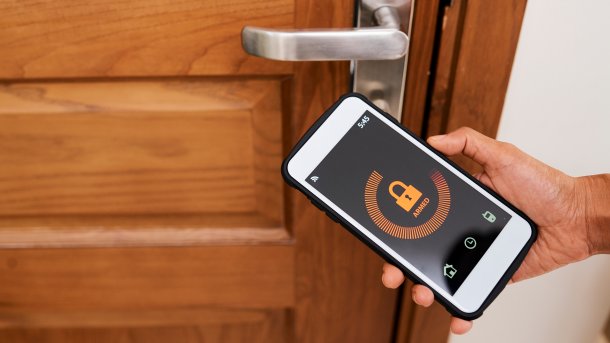
(Image: Shutterstock/Dragon Images)
The German Federal Office for Information Security (BSI) is once again expanding its logo program for IT security labels. The Bonn-based authority announced on Tuesday that manufacturers of smart security solutions can now apply to the BSI for the IT security mark and then use it to adorn their products. Networked security technology such as smart alarm systems and motion sensors, digital door locks (smart locks) or networked smoke detectors are becoming increasingly widespread.
The voluntary label, which can be applied for online, is intended to make IT security features transparent for buyers and help manufacturers to highlight their products on the market. This should contribute to better orientation for consumers and an informed purchasing decision when buying IT products.
Initially, the 2021 label was only available for broadband routers and email services. It now also covers smart home devices such as intelligent and networked televisions, cameras, speakers, toys and garden robots. In 2022, the program was launched for all "smart consumer products" including smart thermostats and remote-controlled roller shutters, followed by smartphones and tablets in 2024.
VdS 6063 standard as the basis
The basis for the label in the new product category is the industry standard VdS 6063, which was developed by the VdS Loss Prevention Association and supported by the BSI. It defines specific IT security requirements for networked fire protection and security technology designed for use in private households and similar areas. These include Intrusion and hold-up alarm systems, smart locks, cameras as part of hazard detection systems and other detection and alarm systems. Associated web, mobile and cloud applications are also included.
According to the BSI, it takes a maximum of eight weeks to obtain the IT security label. Manufacturers of smart security technology must first check themselves or with the help of a conformity assessment body whether their product meets the requirements of VdS 6063. When applying for the label, they undertake to report vulnerabilities to the BSI, to rectify them and to provide the product with security updates throughout its entire service life.
The BSI then only checks the submitted documents for plausibility and known vulnerabilities ("appropriate security") without going into technical depth. If the inspectors are satisfied, the manufacturers receive the label. To ensure compliance with the security standards, the BSI also carries out random and ad hoc checks during the term, for example if new vulnerabilities become known.
Videos by heise
460 license plates are in circulation
The BSI has now issued 460 relevant labels. It was only at the beginning of August that the office issued such logos for the first time in the cell phone category for the current A26, A36 and A56 smartphones in Samsung's Galaxy series. The labels may now also be displayed on smart TVs from the manufacturer's 2025 model range. Zoom received two IT security labels in September.
The logo can be used digitally by the manufacturer in the online store, directly on the product or on the packaging. A QR code on the label takes consumers to a BSI product information page. There they can find easy-to-understand details about updates and security features, for example.


(vbr)


