


"Nano Banana": Google expands its image editing function in Gemini
Google Gemini 2.5 Flash Image improves AI image processing with consistent person representations and other options.
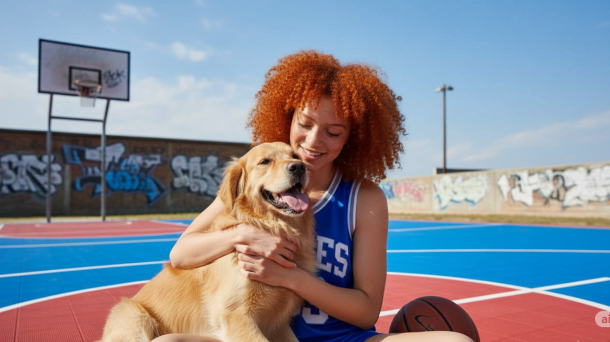
In this case, Gemini 2.5 Flash Image has combined the individual images of a woman and a dog and also exchanged the background. Prompt: "Create an image where the woman in the photo is cuddling the dog on a basketball court."
(Image: Google)
After a mysterious AI image generator called "Nano Banana" went viral a few days ago and speculation arose that Google could be behind it, the company has now confirmed the rumors. Google is equipping its AI application Gemini with a new, more powerful image processing model from its research subsidiary DeepMind, officially named Gemini 2.5 Flash Image. It is primarily intended to improve consistency when changing people and animals in photos and offers further creative image editing options.
Consistency as a core function
A well-known problem with AI-supported image editing of people is that small but important features are often lost. The result then looks similar, but not authentic. This is where the new model comes in and ensures that friends, family or pets remain clearly recognizable even after editing –, for example with a beehive hairstyle from the 1960s or a tutu for the Chihuahua –.

Extended editing options
In addition to improved consistency, Google is introducing several new functions, such as the option to combine photos: Users can now upload multiple images and merge them together. As an example, Google cites a portrait that shows a person and their dog together on a basketball court, although the original photos were taken separately.
Beispiele für KI-Bildbearbeitung mit Gemini 2.5 Flash Image (10 Bilder)
Images can be changed in several successive steps. For example, an empty room can first be painted, then a bookshelf can be added and finally other pieces of furniture can be added. Gemini retains the context of the image and only changes the desired areas.
It should also be possible to transfer the style or texture of an image object to another image. For example, the texture of flower petals can be applied to a pair of wellies or a dress can be designed with the pattern of butterfly wings.
According to Google, the new model is currently the top-rated image editing model in the "Large Model Arena" benchmark. The updated function is being rolled out worldwide for all users of the Gemini app from today, both in the free and paid versions. All images created or edited in the app will be marked with a visible watermark and the invisible SynthID digital watermark.


(mack)

