


"Morbid Metal": "Devil May Cry" in fast motion
Stylish sword-fighting action in an Asian-futuristic scenario, combined with the roguelite game principle: "Morbid Metal" is very appealing to play.
(Image: Ubisoft)
The "Devil May Cry" series, which started in 2001, is not only defined by wild hairstyles and wacky plots, but above all by its extremely stylish action: hero Dante and his cohorts shoot and slash their way elegantly through hordes of monsters, the style and variety of the attacks play just as important a role as hammering the attack button.
It's no different with "Morbid Metal", the debut work of the small Cologne-based development studio "Screen Juice". Here, too, you hammer and hack your way through the mechanical hordes of enemies in a wonderfully fluid and powerful way, while hurtling through a wonderfully cozy Asian scenario at breakneck speed. Unlike in "Devil May Cry", however, constant caution is required here; any ill-considered attack could be your last. Because "Morbid Metal" is not only very stylish, but also a so-called Roguelite.
Empfohlener redaktioneller Inhalt
Mit Ihrer Zustimmung wird hier ein externes YouTube-Video (Google Ireland Limited) geladen.
Ich bin damit einverstanden, dass mir externe Inhalte angezeigt werden. Damit können personenbezogene Daten an Drittplattformen (Google Ireland Limited) übermittelt werden. Mehr dazu in unserer Datenschutzerklärung.
What is a roguelite?
In case anyone is unfamiliar with this term: A roguelite is a special form of roguelikes, a genre of games that began with the eponymous adventure "Rogue" from 1980. This text-based adventure was not only defined by its randomly generated dungeons, but also by the "permadeath" feature. In other words, a game character who died in the "Rogue" dungeon remained dead; there was no way to continue or be resurrected. Studios have continued to develop and refine this concept over the years, resulting in their own genre of "roguelikes", which still exists today.
Roguelites, more awkwardly known as "roguelike-likes", allow for some grace within this idea: True, death is always just one bad decision away here too. But unlike a roguelike, you don't lose everything in a roguelite: the game character is usually reset to the start, but depending on the game, they keep weapons they have found, some of the experience points they have gained or helpful items, for example.
"Morbid Metal" angespielt (7 Bilder)
Flux
Ubisoft
)We are the robots
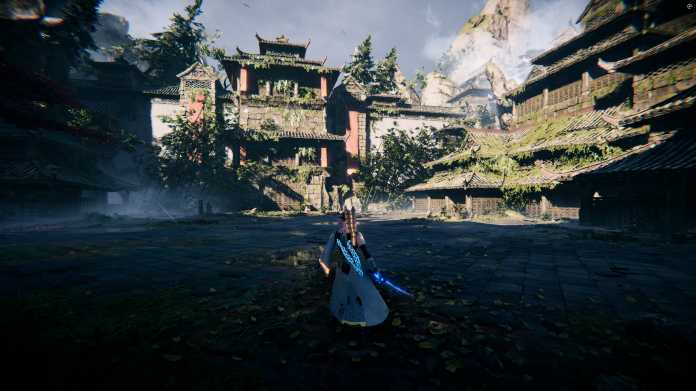
In the case of "Morbid Metal", the roguelite concept works in such a way that players always end up in the starting hub after losing their only life. On the next attempt, the character iteration is counted up by one, and experience gained and unlocked characters are retained. The heroine with whom you begin the adventure, the very unconventionally designed machine lady Flux, is only the first of four characters that you unlock in the course of the game. She swings her long sword rapidly, but only inflicts moderate damage.

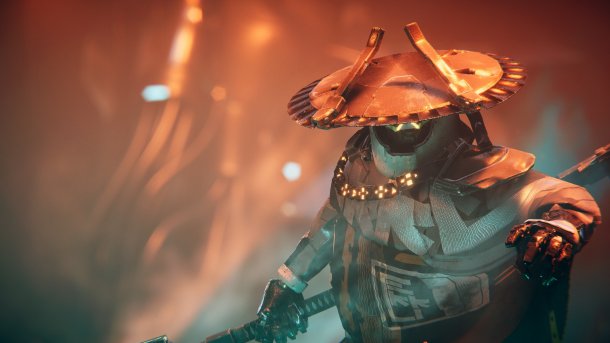
After a short time, players meet the samurai bot Ekku, who not only looks different to Flux with his overly wide hat and massive stature, but also carries a huge broadsword on his back. He does a lot of damage with it, but his attacks are also noticeably slower than Flux. The developers have not yet revealed anything about the other two fighters.
However, it is important to note that not only can you switch between the existing fighters at any time, but that you should definitely do so. Because the robotic opponents are very different in form and function: some are flying, others are small and fast, others are big, slow and have a thick shield. If you try to kill them all with the same button mashing, you will quickly end up in the three-digit iteration range, which borders directly on Frustration City. It therefore makes much more sense to combine the strengths of the characters: Ekku, for example, is good at destroying the giant enemies' shields, while Flux is fast enough to cover them with lightning attacks and quickly flee from their slow counterattacks.
Videos by heise
Devil May Die
The battles in "Morbid Metal" always take place within arenas: You enter an area, enemies appear, the music turns up mightily at – and a minute and two tons of scrap metal later it dies down again. The fights are short and intense, players never have to deal with an unnecessarily large number of opponents at the same time. Once the encounter is over, there is an evaluation of the performance just achieved, as known from "Devil May Cry" and comparable games: Did you vary your attacks or just stubbornly use the same combo over and over again? Did you fight several enemies at the same time or did you just pick them off one by one? Did you get hit a lot yourself? All this and more is included in the rating, which lies between "F" for "Bottle" and "SSS" for "Sensational Style Superstar". The higher the rank, the higher the bonus payout.
In addition, players can choose one of three randomly distributed cards after each mastered battle, which provide advantages in future fights: Fight by fight, the character becomes stronger, has more life energy or evades enemy attacks more quickly. There are additional bonuses for those who run through the landscapes with their eyes wide open, such as increased life energy or a helpful healing potion. Eventually, however, some enemy will always give you a final hit – and then it's always back to the starting hub and the adventure starts all over again. Important parts of the level, such as the hub, always have the same structure, but the areas in between are randomly arranged. This means that players always get to see new areas in a new run, even if they follow the same paths as before.
"Morbid Metal" will be released in Early Access on PC in October. Further versions are possible.


(mma)

