


Fab in China: USA cancels export relief for TSMC
After Intel and Samsung, TSMC is hit too: the US is revoking export rights in Nanjing, China, a move that could complicate the chipmaker’s local operations.
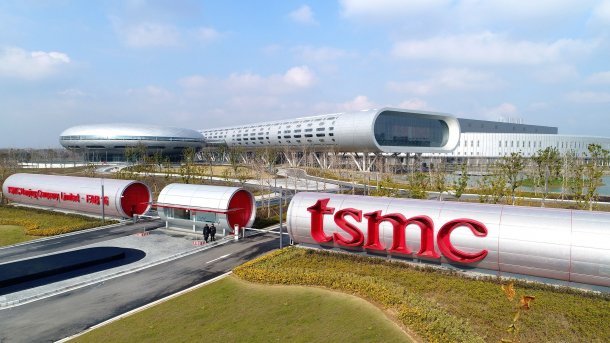
TSMC Fab 16 in Nanjing.
(Image: Taiwan Semiconductor Manufacturing Co., Ltd.)
The US government is now also revoking the export licenses for the Chinese site of chip manufacturer Taiwan Semiconductor Manufacturing Company (TSMC). As was previously the case for Intel, Samsung and SK Hynix, the exemption for TSMC will expire at the end of the year.
"Ensuring operations"
TSMC confirmed to various media that it had been informed by the US government about the expiry of the blanket export license for the Nanjing fab. The company has taken the necessary steps and remains in contact with the US government, it said. The company is continuing to work on "ensuring the uninterrupted operation of TSMC Nanjing".
With the classification of the Nanjing fab as a "Validated End User" (VEU), TSMC was able to purchase US technology for the Chinese site without having to obtain an export license each time. This status will now be withdrawn from the site.
From the turn of the year, TSMC will still be able to import technology that is subject to export restrictions in the USA. However, the company will then require individual export licenses. This could affect the operation of the fab.
Videos by heise
Stock market remains relaxed
Nevertheless, the stock market reacted mildly to the news. TSMC produces chips using the 16 nm process and other older semiconductors in Nanjing. The site only contributed around 2.4 percent to the company's total revenue in the 2024 financial year. TSMC had already warned in its annual report that the exemption could be revoked at any time.
The US government had previously revoked the VEU status for Chinese subsidiaries of Intel, Samsung and SK Hynix. From January 2026, these three manufacturers will also require a license to export US technology to their Chinese sites.


(vbr)


