


Class action lawsuit: 288 million US consumers against Amazon.com
Sellers on Amazon.com must comply with all kinds of pricing clauses. This distorts competition and harms consumers, says a now-approved class action lawsuit.
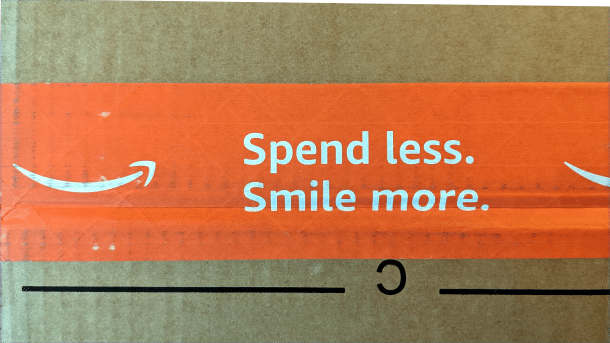
A strange game. The only winning move is not to play.
(Image: Daniel AJ Sokolov)
Amazon.com is facing a class action lawsuit on behalf of 288 million US consumers who made purchases via the Marketplace. The Marketplace is the part of the online trading platform where third parties, not Amazon itself, offer goods for sale. The consumer advocates accuse the company of driving up prices through price gouging and high fees, thereby harming shoppers.
Amazon has tried to prevent certification as a class action, arguing, among other things, that the plaintiff group is too large, the best price clause has been abolished, and the plaintiffs' calculation model is unusable. Third-party retailers sometimes also lower prices due to Amazon's conditions. The US federal district court conducting the proceedings nevertheless approved the class action and published the statement of claim.
The allegations
It describes Amazon.com as a dominant online retailer that exercises great market power not only in American online retailing itself, but also via the third-party retailers in the Marketplace. Amazon has gradually increased its fees by a total of 42 percent in just five years. On average, 27 cents of every dollar spent by customers in the Marketplace ends up with the company, not the actual seller. As a result, the Marketplace is far more profitable for Amazon than the business with goods sold by Amazon itself, where Amazon relies on narrow margins. The retailers are dependent on the Marketplace, around half of them generate more than 80 percent of their turnover there; Amazon exploits this to its own advantage, which violates competition law, specifically three provisions of the federal Sherman Act.
The high Marketplace fees would ultimately have to be borne by the customers. This is because Amazon's best-price clauses restrict retailers so that they are not allowed to offer their goods at lower prices on other, cheaper online platforms or their own web stores. The result is less competition and generally higher prices, to the benefit of Amazon but to the detriment of customers. The lawsuit seeks compensation for all US consumers who purchased at least five products via the Amazon.com marketplace after May 25, 2017.
A jumble of regulations
Whether the allegations are true remains to be seen in the main proceedings. The plaintiffs have requested a jury for this. Amazon's unsuccessful petition against certification as a class action reveals one thing above all: the matter is complicated. This is because a number of contractual clauses for Marketplace merchants work together.
Videos by heise
Originally, Amazon prohibited them from offering lower prices elsewhere than on Amazon Marketplace. According to the company, this rough best price clause (Price Parity Provision, PPP) has "rarely been enforced" and was lifted in the USA in March 2019. Amazon no longer applies it in the EU, either.
However, other provisions remain in force, such as Select
Competitor – Featured Offer Disqualification (SC-FOD), Amazon Standards for Brands (ASB), Marketplace Fair Pricing Policy (MFPP) including Atypical Pricing –
Featured Offer Disqualification (AP-FOD), something called WCP and, since November 2021, a Clarification to the Seller Code of Conduct (SCC).
FOD and co
SC-FOD is about the "featured offer", the decisive place in the sun: If a customer calls up the webpage for a specific, available product, one retailer appears directly as the provider, even if several retailers are offering the same thing for sale. Only a few customers click through to the other sellers, so this classification is important. However, if a Marketplace retailer demands a higher price than Amazon sees in selected other online stores (select ccompetitors), they are disqualified. Since 2022, Amazon says it has been trying to prevent a cheaper offer from the same retailer on another website from leading to disqualification in the Marketplace.
The AP-FOD clause, where "atypical" prices lead to disqualification, has a similar effect. It is part of MFPP, which is intended to combat usury. MFPP apparently also includes WCP, whose explanation is blacked out in the published submission.
With ASB, Amazon therefore focuses on selected branded products whose prices many consumers use as a reference for the general price level of a store. If such a product is cheap, the customer believes that all other products are probably also cheap. Amazon does not explain exactly how ASB is applied, but states that it is "not automatic or mechanical".
The SCC demands "fair and honest behavior" from retailers. In November 2021, the SCC was tightened to combat unfair sham transactions: some merchants had paid third parties to order certain products on the Marketplace. They were then able to post praise about the product, but above all, Amazon's algorithms reacted to the purchases and recommended the offer to other consumers. They were then given the false impression that many others had purchased the item at a certain price. Amazon explains that this aspect of SCC has nothing to do with price parity with other online stores.
Class could shrink
The lawsuit is also based on informal statements, instructions, and measures taken by Amazon employees. Amazon argues that these are, if at all, individual cases of employees who have acted contrary to their training and the guidelines. Such cases are to be clarified individually and are not accessible to a class action.
The court nevertheless approved the class action. This means billions are at stake for Amazon. However, it is possible that the court will exclude parts of the class in the course of the further proceedings, so that in the end it may not be about the entire 288 million consumers. Or that the class will be divided and then litigated for different amounts. In addition, Amazon may appeal the class certification.
- The statement of claim together with the application for admission as collective proceedings
- Amazo.com's futile arguments against class action certification
- Court order with certification as a class action
The case is called Elizabeth De Coster et al v Amazon.com and is pending in the U.S. District Court for the Western District of Washington, where Amazon's corporate headquarters are located, in case number 2:21-cv-00693.


(ds)


