


Virtual reality for seniors: How virtual travel brings back memories
A young German company shows how virtual reality can create closeness, remembrance and participation for older people.
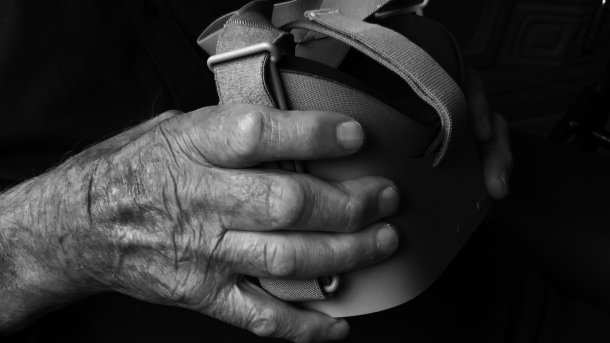
Virtual reality can build a bridge between generations and give older people new impetus.
(Image: RemmyVR)
Roxana Hennig still remembers the moment when the idea for RemmyVR took shape. Her grandmother was physically severely restricted, but mentally completely clear. Walks, excursions or trips were no longer possible, and life increasingly shifted to her own four walls. At the same time, Hennig initially discovered virtual reality – in a completely different context: gaming, young target groups, technology enthusiasts. Nevertheless, she couldn't let go of the idea of whether this technology could also be used to create something for older people. "Unfortunately, my grandma didn't live to see it," she says looking back. The idea remained and became the starting point for a project that is now in use in numerous care facilities.
Digital journeys between Venice and Magdeburg
RemmyVR offers virtual excursions in 360-degree videos that are specially produced for older people. Instead of wild rollercoaster rides or VR exercise therapy, RemmyVR focuses on calm, atmospheric scenarios: A walk through the city park, a gondola ride in Venice, a view of red foxes in Japan. The content is created in close consultation with the target group. "We first had to find out what works," explains Hennig. "How much movement can the image take? Which scenes are not too much?"

(Image: RemmyVR)
The reactions quickly show that this is not about technological show effects, but about memory, emotion and participation. Some senior citizens want to travel to places they used to visit, others want to finally see where their children and grandchildren go. "One man chose London because his daughter regularly travels there with school classes. After the movie, he said: now I can talk to her better about the city," says Hennig. It is precisely these kinds of encounters between generations that she wants to facilitate with RemmyVR.
There are also differences between East and West Germany: while West German senior citizens often experienced long-distance travel in their youth and are correspondingly curious about international destinations, residents from East German facilities often prefer regional content. This includes the Harz Mountains, the Baltic Sea, or the city park on their doorstep. In discussions with facilities, it becomes clear time and again how important a clearly focused application is. While other providers combine VR offerings with games or interactive elements, RemmyVR concentrates on the travel experience. "Many residents are exhausted after 10 to 20 minutes anyway, so it's good to talk about what they've seen together." The films, therefore, not only serve as entertainment, but also as a conversation starter in everyday care.

Reduced to the essentials
The hardware used is deliberately kept simple. RemmyVR originally started with Oculus headsets, but then switched to the Pico G2 and later to the G3 because these devices are more hygienic to use in groups and easier to operate. Weight also plays a role: many of the users have physical limitations or are lying in bed. In such cases, the glasses are simply put on while the person is sitting up – an application that is also used in palliative care.
Most of the content is produced by RemmyVR itself. The team travels around Germany or works with cameramen worldwide. The range now includes over 60 films. The recordings are deliberately kept calm and feature optional commentary: Anyone who wants to can listen to interesting facts about Tower Bridge or Trafalgar Square during a virtual stroll through London, for example, or simply enjoy the city sounds and music.
Empfohlener redaktioneller Inhalt
Mit Ihrer Zustimmung wird hier ein externes YouTube-Video (Google Ireland Limited) geladen.
Ich bin damit einverstanden, dass mir externe Inhalte angezeigt werden. Damit können personenbezogene Daten an Drittplattformen (Google Ireland Limited) übermittelt werden. Mehr dazu in unserer Datenschutzerklärung.
Not a medical device, but effective
RemmyVR has not yet been scientifically supported, as Hennig emphasizes in the interview. "We don't see ourselves as a medical product, but as an offer in the activation and wellness sector." Nevertheless, the company refers to existing studies that prove the positive effects of VR on dementia and cognitive impairments, in terms of attention, memory, or well-being. In practice, care facilities report precisely such observations: "During one of our films with elephants, there was a reaction from a resident with dementia that no one had expected," says Hennig.
However, access to the technology remains a challenge. Although the app is deliberately designed to be easy to use, not every facility has the staff or the technical knowledge to introduce new systems. This is why RemmyVR offers extensive training for care staff and a complete package without a complicated subscription model. "Most facilities appreciate it when they can make a one-off investment and then know what they are getting", says Hennig.
Age-appropriate instead of overwhelming
When asked whether augmented reality or mixed reality could play a role for RemmyVR in the future, Hennig answers hesitantly. Although she has tried many things, she says that everything has to be extremely simple and accessible, especially when working with older people. "If you need just two clicks to start the movie, that's the maximum for many people." This is another reason why she sees more potential in other digital enhancements, such as the use of learning AI systems to better tailor content to individual interests. Initial considerations in the direction of voice assistance or semantic search are already underway.
Videos by heise
For many users, RemmyVR is more than just a short trip into the virtual world. They are moments that bring back memories, spark conversations or create a sense of belonging – despite physical limitations. The fact that a personal experience provided the impetus is perhaps the best thing about this story. Because sometimes it's not the technology itself that counts, but what it makes possible.


(joe)

