


Opinion: Finally regulate the term "smart"!
This year's IFA shows that there is no improvement in sight for the chaos of "smart" products. It's time for politicians to take action, demands Falk Steiner.
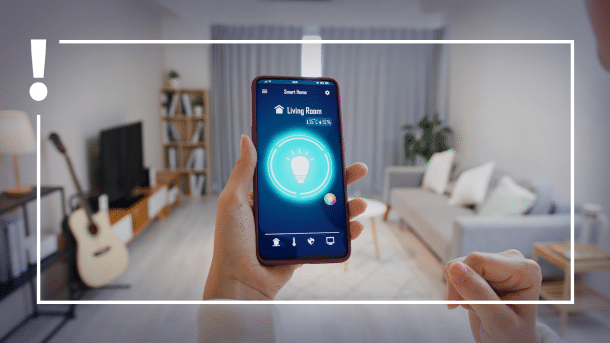
(Image: Shutterstock/aslysun)
The smart home remains a manufacturer-induced hell. There is nothing to suggest that compatibility will improve beyond individual scenarios. What pleases installers and specialist companies is a horror for people who want to use technology above all else. Time for clear rules on what can be called "smart"!
The smart home is a vision that has now been around for several decades. What began with the idea of no longer having to control roller shutters throughout the house has now become a modern alternative to model railroads for many Germans –, including a disproportionately high number of readers of heise online –: There is always something that can be optimized, and there is currently no shortage of new models. This is complemented by an entirely different development: the emergence of solar systems, especially smaller ones, where every watt hour of self-consumption noticeably reduces the electricity bill. Who wouldn't try to coordinate everything?
Only one area has done a great job with smart devices so far: the marketing departments. Electrical appliances in every shape and color, from smart light bulbs and smart washing machines to heating and power controls, roller shutters, televisions, plugs, watches, glasses and more and more kitchen appliances: everything is labeled as smart as soon as it requires an account in the manufacturer's cloud. And not just at IFA in Berlin, where the industry traditionally presents its innovations. And this year, everything down to the deep-fat fryer should be as smart, networked and intelligent as possible. So smart that humans, with their limited abilities and the resulting desire for convenience, seem very simple in comparison.

You should cross seven bridges
In theory (lighting mood: party), everything looks nice: buy a balcony power station, connect it up, harvest electricity. And to ensure that everything runs smoothly and saves energy, you can run certain devices behind smart sockets. And this is where the average person's hard collision with technical reality begins: cloudy promises that most "smart" devices don't even begin to keep (lighting mood: cold). It starts with a banal basic question: How should the devices communicate with each other? Bluetooth-LE, DECT-ULE, ZigBee, WLAN, Matter or something completely different, proprietary? And if via WLAN, the home network or a second network set up for this purpose? Or even an island access point, such as some inverters permanently set up? Which solution should be used to control this zoo centrally? App-based, via a cloud service? From the NAS? Which devices can be addressed with which software and via which standard? And how can they then be linked together? It's pure chaos.
Lots of empty promises
In fact, the electrical and electronic appliance manufacturers have managed to do one thing above all: drive out the desire to make your own four walls smart (lighting mood: Grim, the washing machine starts to rotate in the background). After all, if you have to spend weeks trying to work out which appliance can talk to which, when the manufacturer's information on appliances is at best incomplete and at worst misleading. Or who advertise with promises, such as the support of the Matter standard by Fritz products announced at IFA 2023 (the Connect light switches to permanent red).
Two years later, only a fraction of the manufacturer's devices can still support the common standard, which other providers also continue to struggle with. The only question that really arises with something like this is: What's the point? (The smoke detector tries to detect smoke based on the author's snorting, the extractor hood switches to maximum power).
And so users still have to ask themselves the question: Which device talks to which other device via which bridge? How can I coordinate the light bulb and the tumble dryer with the energy storage unit and the motion sensor? How can I coordinate the heating thermostat with the window sensor? What may primarily be a sporting challenge for some heise readers, DIY enthusiasts, command-line electricians and self-confident makers is an absolute disaster when it comes to usability by the masses.
Videos by heise
The EU should strictly regulate the term "smart"
It is therefore high time that politicians did what they are rarely loved for: prescribing clear rules. In this case, that would be in the interests of all consumers. Just as the EU put an end to the chaos of plugs and the special paths in favor of consumers years later with the specifications for USB-C connections, without the world having come to an end since then, just as the EU abolished the chaos for travelers in Europe with the roaming regulations, it would now be time to prescribe the manufacturers by law. If you want to designate a device as smart, then you have to meet certain standards to do so.
This could also be a reference to technical standards that the industry itself can develop further. Then consumers can be sure that "smart" doesn't mean "isolated solution from a manufacturer that doesn't want to be interoperable". And, incidentally, provide a few guidelines on the subject of cloud independence. Anyone who wants to label devices as "smart" should have to maintain minimum standards for usability and interoperability. For example, what would be wrong with making configuration via a locally accessible browser interface mandatory? And not just via a proprietary app that perhaps also requires an account with the manufacturer?
The current proliferation of everything being called smart and in reality hardly anything being compatible with each other only leads to two things: Frustration and a lot of avoidable electronic waste. Put an end to it! Then the mood in the consumer smart world will brighten up again.


(nie)


