


New package: EU imposes sanctions on Russia in crypto sector for the first time
Restrictive EU measures against Russia's war in Ukraine now also targeting crypto platforms. Transactions in Bitcoin and other cryptocurrencies are prohibited.
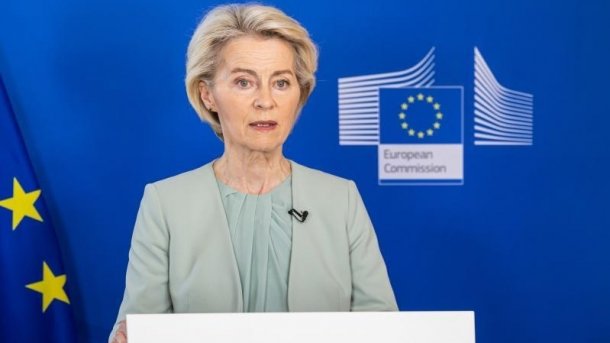
(Image: EU-Kommission)
On Friday, the EU Commission launched its 19th package of sanctions against Russia. Commission President Ursula von der Leyen (CDU) emphasized when presenting the planned restrictions that the Kremlin had “shown the full extent of its contempt for diplomacy and international law” in its war of aggression against Ukraine. According to her, these sanctions will also target crypto platforms for the first time. Transactions in cryptocurrencies such as Bitcoin, Ethereum, or Ripple would be banned.
The EU wants to prevent Russia from circumventing existing sanctions with the help of crypto tokens. Since crypto transactions take place outside the traditional banking system, they offer a potential loophole. The targeted sanctioning of crypto exchanges that serve Russian actors is intended to close these loopholes. This should increase the financial pressure on Moscow.
However, the move is controversial: crypto advocates argue that the essence of blockchain technology lies in its decentralization and resistance to censorship. They see sanctions targeting centralized crypto exchanges as an infringement on this fundamental principle. Critics also fear that blanket sanctions will also affect uninvolved Russian citizens who use cryptocurrencies as protection against inflation or as an alternative investment opportunity. In the past, the Ukrainian government had even called for the blanket blocking of all Russian crypto accounts, which met with international resistance.
Crypto sanctions are controversial
At the same time, it is questionable how effective such sanctions can be. Decentralized platforms and private crypto wallets are difficult to control. Although transactions can be tracked on the blockchain, it remains difficult to assign them to a specific person: those affected could, in principle, circumvent the platforms that are forced to carry out checks. The EU has also already created a comprehensive set of rules for the crypto market with the Markets in Crypto-Assets Regulation (Mica). Opponents see the sanctions as a further step that potentially goes beyond what is necessary, counteracting existing requirements or unnecessarily complicating them.
Videos by heise
Von der Leyen, on the other hand, emphasized that the EU would take stronger action against circumvention practices in the financial sector. “The methods are becoming increasingly sophisticated, but we are adapting our sanctions to stay one step ahead.” That is why a transaction ban will also be imposed on other banks in Russia and on financial institutions in third countries that cooperate with them. In addition, more direct export restrictions on goods and technologies used in combat are to come into force.
Turning off the tap on liquefied natural gas
“Russia's war economy is based on revenues from fossil fuels,” von der Leyen said. “We want to cut off access to these revenues.” That is why the EU will also ban imports of Russian liquefied natural gas (LNG) into European markets. It is time to “turn off the tap.” The member states are prepared, she said, because they have “saved energy, diversified supplies, and invested in low-carbon energy sources like never before.”
The major Russian energy trading companies Rosneft and Gazprom “are now subject to a complete transaction ban,” von der Leyen emphasized. The assets of other companies would also be frozen. “We are now going after those who are fueling Russia's war by buying oil despite the sanctions,” the 66-year-old announced. The measures now also target “refineries, oil traders, and petrochemical companies in third countries,” including China and India. The “Russian shadow fleet” will also be subject to tougher sanctions.
Sources in Brussels say that the most effective measures can only be implemented in close coordination with the US. A team of high-level experts has therefore been sent to Washington to continue talks on stricter economic restrictions and their enforcement. However, US President Donald Trump has stated that he is only prepared to impose “significant” sanctions on Russia if NATO members completely withdraw from the Russian oil business. This is considered a major challenge, as countries such as Turkey, Hungary, and Slovakia have so far refused to seek alternative oil suppliers.


(afl)


