


Wi-Fi chip N1: Apple promises more efficient iPhone location tracking
The iPhone knows where it is, but this consumes a relatively large amount of power –. Apple wants to make tracking more economical with its in-house Wi-Fi chip.
(Image: Sebastian Trepesch / heise medien)
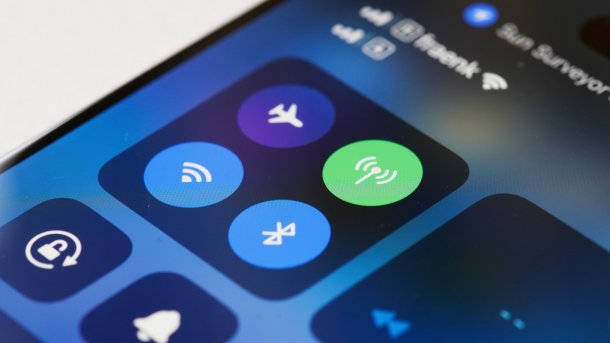
For the first time, iPhones feature an Apple Wi-Fi chip: In the iPhone 17, 17 Pro (Max), and iPhone Air, the manufacturer's own N1 chip establishes connections to Wi-Fi routers and also supports Bluetooth and Thread. Apple has so far remained tight-lipped about technical details, except to mention support for the Wi-Fi 7 and Bluetooth 6 standards. It has only stated that the N1 is designed to improve the performance and reliability of features such as "Personal Hotspot," which allows the iPhone to serve as a mobile modem for another device, and AirDrop.
Economical background tracking via Wi-Fi instead of GPS
In an interview, Apple managers have now promised a concrete and tangible efficiency advantage: thanks to the joint development of N1 and A19 Pro, the main processor can largely "sleep" during important wireless connections, Tim Millet, who is responsible for Apple's chip platform, explained to CNBC. At the same time, this enables background activities with "extremely low energy consumption," including "high-precision location tracking."
Videos by heise
In addition to GPS and GNSS, the iPhone also uses information about cell towers and nearby Wi-Fi SSIDs to determine its location – The latter in particular ensures fairly accurate positioning in cities and indoors. Apple operates a huge database for this purpose, to which every iPhone contributes data about the WLANs in its own environment. This makes it possible to rely less on the power-hungry GPS for location tracking and "not wake up the main processor so often", another Apple manager explained in the interview.
New location functions for Apple Maps
By default, iOS logs the frequent locations of the iPhone and therefore the owner on the device. The data is also synchronized between your own devices via iCloud, protected by end-to-end encryption, as Apple promises.
With iOS 26, Apple's Maps app will also record the history of places visited and learn the routes users take – in order to suggest alternative commuting routes in the event of traffic jams, for example. Apple has blocked these features in the EU so far. The company apparently fears that it would otherwise have to open them up to other app providers under the rules of the DMA.
Empfohlener redaktioneller Inhalt
Mit Ihrer Zustimmung wird hier ein externer Preisvergleich (heise Preisvergleich) geladen.
Ich bin damit einverstanden, dass mir externe Inhalte angezeigt werden. Damit können personenbezogene Daten an Drittplattformen (heise Preisvergleich) übermittelt werden. Mehr dazu in unserer Datenschutzerklärung.


(lbe)


