


HTC launches global XR hackathon for students with focus on WebXR
Students build their own virtual worlds in the browser at HTC's first global XR Hackathon – from games to social spaces.
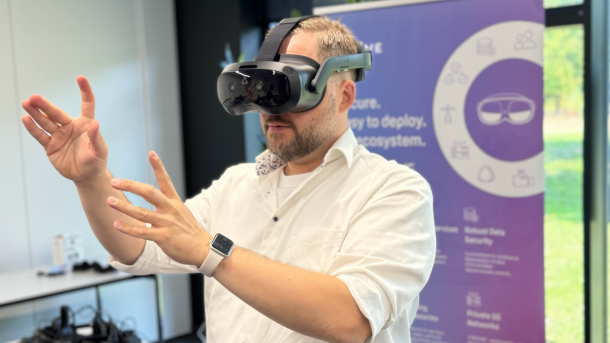
With "Viverse Spark", HTC is organising an XR hackathon aimed specifically at creative students.
(Image: Christian Steiner)
With "Viverse Spark," HTC is organizing a global hackathon for the first time. The target group is students who develop their own immersive content based on WebXR. The competition is being organized with the participation of renowned universities worldwide.
Creativity in the browser: WebXR without hurdles
The focus is on the creation of interactive 3D experiences in three categories: storytelling, games, and social interaction. The submissions are to be realized directly in the browser-based Viverse system. HTC's platform for immersive content supports numerous WebXR frameworks, including Unity WebGL, Godot, ThreeJS, Babylon, and AFRAME. Students without programming skills can also take part. No-code implementation is possible via the “PlayCanvas” tool.
Andranik Aslanyan, responsible for the growth of the platform, emphasizes that Viverse deliberately focuses on low-threshold access: content should run on any device without the need for special high-end hardware. “We want everyone to be able to use interactive content on the devices they personally have access to,” says Aslanyan. Participation in the competition is also intended to provide students with practical experience and prepare them for future careers in the XR sector.

XR hardware and cash prizes
Universities also see potential: Dr. Allen Y. Yang, Director of the FHL Vive Center for Enhanced Reality at UC Berkeley, expects that the students' contributions will play a key role in shaping the future applications of virtual and augmented reality. He speaks of a “creative generation” whose projects could provide key impetus for immersive technologies.
Videos by heise
The participating institutions include the Taiwanese universities NTU, NTHU, NUK, and STUST, UC Berkeley, Carnegie Mellon University, the University of Southern California, and the Ringling College of Art and Design. Winners can look forward to cash prizes of up to 5,000 US dollars per team. In addition, a total of 20,000 US dollars each will be distributed to three institutions and up to 20 HTC Vive Focus Vision XR headsets.
Anyone wishing to take part or seeking information on future competitions can contact HTC directly via the event website.


(joe)

