


New armaments glitch: Bundeswehr digital radio fails practical test
New military radios failed in tests due to poor operability and are deemed "not suitable for troops," posing a setback for future armed forces projects.
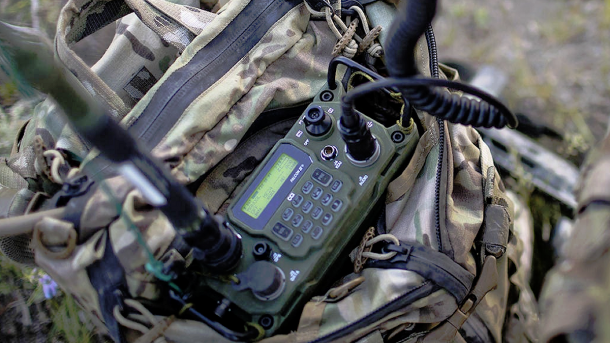
Among other things, the Bundeswehr wants to purchase AN/PRC-160(V) radios.
(Image: L3Harris)
One of the Bundeswehr's most important modernisation projects, the multi-billion euro "Digitalisation of Land-Based Operations" (D-LBO) project, is still experiencing massive difficulties. At the heart of the project is the purchase of new radio equipment. Internal documentation now reveals that a practical test for the armed forces' new digital radio had to be cancelled in May, as the systems were classified as "not suitable for troops". This mishap threatens the ambitious timeline for the urgently needed digitalisation of the army and could mean the first major armaments crisis for Defence Minister Boris Pistorius (SPD).
The aim of D-LBO is to replace the troops' currently outdated and easily intercepted radio systems with a modern, encrypted digital command and information network. The high-tech equipment from the manufacturer Rohde & Schwarz is intended to revolutionise battle management. The Bundestag Budget Committee released 1.35 billion euros at the end of 2022 for the procurement of an initial 20,000 radios. Tens of thousands of vehicles, from tanks and lorries to off-road vehicles, are to be gradually equipped with them. However, according to Der Spiegel, the trial run at the Munster military training area still revealed considerable weaknesses.
The software-based operation of the digital radio proved to be so complicated that soldiers found it difficult to set up radio circuits. A standard test in which a commander wanted to quickly switch to a different radio network failed. The software is described as too complex for use in battle tanks and under combat conditions. According to Spiegel, even the pure radio communication was sometimes unstable.
At the end of 2024, the defence company Rheinmetall announced that it had won a contract worth 1.2 billion euros for IT integration as part of D-LOB together with the company Blackend. The corresponding system is to be provided under the configuration control of BWI, the Bundeswehr's IT system house. There is also a contract for "integration into the platforms", which Rheinmetall and its competitor KNDS have secured.
Massive problems known for some time
Although the systems failed the test, they are still being installed in vehicles such as those of the NATO rapid reaction force, Panzerbrigade 37. However, without a functioning digital radio, these weapon systems are no longer operational, which reduces the availability of the flagship unit.
The multi-year initiative has been struggling for some time with massive problems in the physical integration of the components into the various 350 or so vehicle types: So far, the smooth installation of the new radio systems has only been successful in around 30 of the 200 or so different vehicle classes initially selected. For many others, the corresponding customization work has yet to begin or has not yet been completed. According to the report, the alternators in some vehicles do not provide the necessary stable voltage for the new devices.
As early as 2018, the authors of a Ministry of Defence report on armaments issues warned that "the major challenges and risks of D-LBO" lay in the timely "integration into the various platforms".
Bridge solution and decision in November
The political consequences are considered serious. According to Pistorius, he only found out about the specific issues in mid-September – allegedly in a roundabout way – although the management had already been informed at the beginning of June. This indicates that the coordination centre set up by the minister in the procurement office after the initial problems, which was supposed to inform him directly, did not fulfil its task.
Videos by heise
Although warning signs came from the troops and from members of the opposition and coalition, Pistorius assured the Bundestag on 10 September that they were "on schedule". This has now led to sharp criticism from MPs who feel they have been misled.
To prevent an immediate threat to operational readiness, the defence department is currently working feverishly on a bridge solution. The plan is to combine the new digital radio with the outdated analogue radio systems. The final decision on the continuation of D-LBO is to be made after a further practical test in November. Until then, it is rumoured that the operating software will be simplified by means of an update. If the second attempt also fails in practice, the troops would have to look around for a possibly entirely different Plan B for this part of the ongoing digitalisation efforts under extreme time pressure due to NATO requirements.


(anm)


