


A small new beginning: Rabbit R1 receives a comprehensive update with rabbitOS 2
The AI start-up Rabbit releases rabbitOS 2 for its R1 device. The update brings a new interface and the option to create apps by voice.
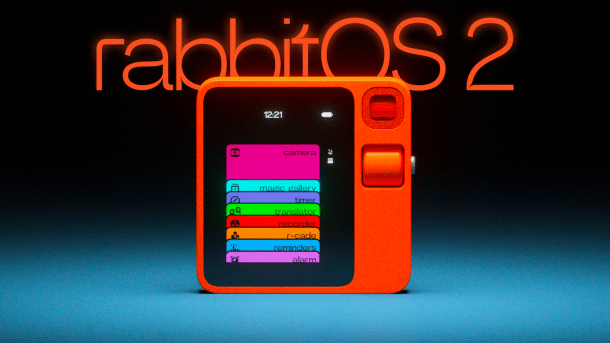
rabbitOS 2 will literally reshuffle the cards for the Rabbit R1.
(Image: Rabbit)
The AI startup Rabbit has released rabbitOS 2, a comprehensive update for its R1 device. According to the company, the user interface has been completely revised and new AI-supported functions have been added. The update is a response to the massive criticism the device received after its launch in early 2024.
CEO Jesse Lyu admits that there was a big gap between user expectations and the original software experience. "So we decided to completely revamp the software and redesign the entire r1 experience," explains Lyu. The company is effectively asking for a second chance – an unusual step in the tech industry.
The original R1 caused a stir when it was unveiled at CES 2024, but disappointed at market launch with faulty software and non-functioning features. While competitor Humane failed with its AI Pin and sold its intellectual property to HP for 116 million US dollars in February 2025, Rabbit is sticking with its product.
The new rabbitOS 2 introduces a card-based user interface based on the concept of a card game. Each of the device's main functions has its own card in the deck, which users can navigate by swiping on the touchscreen or using the scroll wheel. The touchscreen now works like a conventional smartphone with taps and swipes, whereas the original version had a more complicated operation using the side button.
Empfohlener redaktioneller Inhalt
Mit Ihrer Zustimmung wird hier ein externes YouTube-Video (Google Ireland Limited) geladen.
Ich bin damit einverstanden, dass mir externe Inhalte angezeigt werden. Damit können personenbezogene Daten an Drittplattformen (Google Ireland Limited) übermittelt werden. Mehr dazu in unserer Datenschutzerklärung.
Create apps by voice with Creations
The central new feature is called Creations and allows users to create their own apps, tools and games directly on the device – just by talking to the AI agent. The system is based on the concept of "vibe coding", where users can develop software without any programming knowledge. The function is powered by Rabbit Intern, a universal AI agent that the company officially launched in June.
The creation process involves a conversation: Users describe the desired app, whereupon the device asks more precise questions. The AI agent has extensive knowledge of the R1 hardware, so no technical details need to be specified. According to Engadget, the process takes around five minutes – for creating a guitar tuner app with a customizable interface, for example.
The finished creations can be shared via Rabbithole, Rabbit's online hub for the R1, or via QR code. The company thus dispenses with a traditional app store, as with Android or iOS. Users can choose from a growing list of existing creations on the website and install them on their R1 for free.
Videos by heise
Further refinements and new functions
In addition to Creations, rabbitOS 2 brings numerous other improvements: Conversations with the R1 are now displayed on the screen, combining multimodal inputs of voice, text, and images in the same request. Meeting recordings are stored locally and work offline, including AI-generated summaries. Rabbit Intern now also supports image generation, and transcripts of translated conversations are available in the Rabbithole journal.
Despite the extensive overhaul, the fundamental challenge remains: Users don't want to carry two devices. Lyu admits that many functions on smartphones – Banking apps in particular – cannot yet be replaced by AI agents. However, he hopes that consumer demand will persuade lenders to support Rabbit and the R1.


(mki)


