

Underrated BMW 3 Series: The 320/6 – the fine little six-cylinder
Our buying guide series on underrated or promising old 3 Series BMWs begins with the six-cylinder entry into the first 3 Series – the 320/6
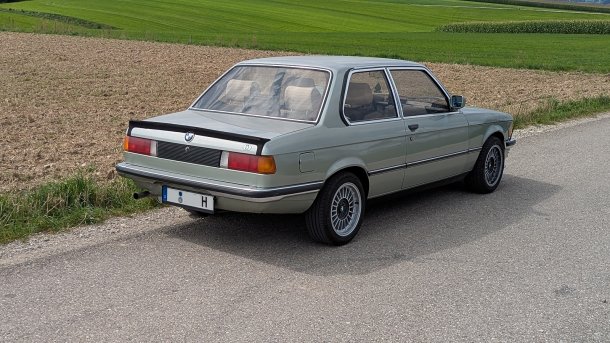
BMW's 3 Series turns 50 this year, making it almost the brand's oldest model series. It arguably still best expresses the brand's core. For a series of articles, we have selected models from different generations that are currently flying a bit under the radar when you're considering buying a used 3 Series.
When people talk about the first 3 Series today, the 323i is almost always the focus. The top model of the series was celebrated for its superior driving performance at the time and is clearly the favorite among fans of the series, internally known as the E21. This often overshadows the fact that there's a lot to be said for one of the three 320 models. The 320 with the six-cylinder carburetor, in particular, would deserve more attention – which it actually received in terms of sales numbers back then.
What speaks for the 320?
First, we need to sort out the E21 320 range a bit. In the first two years, there were two 320 four-cylinder engines, one with a carburetor and one with Bosch K-Jetronic injection. From 1977, both were replaced by a carburetor six-cylinder that sold very well. This small six-cylinder with two liters of displacement and 90 kW doesn't quite achieve the driving performance of a 323i, which has 105 kW. The 320 is persistently associated with the common designation "air pump," and this assessment isn't entirely wrong. Only from around 4500/min does acceleration become noticeably lively; below that, not much happens. One of the two more finely geared, optional five-speed transmissions at the time helps to find the right RPM range. If you opt for the 320 with the three-speed automatic, you really don't need to concern yourself with the elevated dynamic demands that are often attributed to the brand.
BMW 320/6 (E21) Exterieur (5 Bilder)

Martin Franz
)However, driving performance should only be a secondary consideration when it comes to the appeal of driving a classic car. Whether it's a 320 or a 323i: what seemed rapid back then in terms of acceleration is now overshadowed by any base VW ID.3 – objectively and even more so subjectively. For the standards of the era in which both six-cylinders were born, these were fast cars. But that was almost 50 years ago, and the benchmarks have shifted dramatically. A 320 lags about a second behind the 323i in a standard sprint, but that's less important than it was in 1977. No E21 enthusiast should expect to compete with superior driving performance today – an assessment that even the Alpina derivatives don't change.
A 320 six-cylinder offers a few advantages under these conditions. Its running smoothness is at least as good as that of the top model; some drivers even see the velvety two-liter as slightly superior in this regard. Its low-vibration running and pleasant timbre still delight engine enthusiasts. Furthermore, as with the 02, the predecessor to the 3 Series, maintenance is simpler. A 2002 with 74 kW had a carburetor, while a 2002 tii with 96 kW had a Kugelfischer injection system. Adjusting such a system is anything but trivial and is a job for experts. The differences are smaller in the E21, but here too, finding a specialist for the 320's carburetor is at least somewhat easier than for the K-Jetronic in the 323i. The Solex carburetor does have its own quirks. If you don't screw the three housing parts back together evenly and with the exact torque when replacing the two gaskets, you risk a warped housing. The carburetor can then only be sealed again in exceptional cases.
BMW 320/6 (E21) Motor (3 Bilder)

Martin Franz
)There is another downside to the small six-cylinder, and it shouldn't be kept secret. The 320 tends to consume even more fuel than the 323i, and the difference increases when the two-liter is driven hard. It's possible to drive both on less than 10 liters/100 km, but even mild demands on performance will push consumption to over 12 liters. If you really push the small 3 Series, you'll get over 14 liters of consumption. Both require 98 octane fuel, which is called "Super Plus" since marketing has eliminated "Normal."

What to look out for?
The number one enemy is rust, because BMW also only conserved sparingly back then, and in the E21's youth, winter roads were treated more generously with salt than today. No single part stands out significantly positively; the prospective buyer needs to inspect the candidate thoroughly – preferably on a lift. Sills, underbody, end panels, fenders, wheel arches, front mask, doors, and the window frames, which are difficult to repair, should be carefully checked. Parts of the interior, including the dashboards, which often crack with age, and also some rubber parts, are sometimes difficult to obtain. Many parts are available from BMW itself, but they are sometimes very expensive.
BMW 320/6 (E21) Innenraum (5 Bilder)

Martin Franz
)There are also a few issues with the drivetrain. Blueish clouds from the exhaust indicate worn valve stem seals – at best. If the previous owner didn't properly warm up the six-cylinder or constantly subjected it to high loads, the cylinder head might also be cracked. Alternatively, the piston oil scraper rings could be worn out. Oil and coolant should be checked for traces of the other substance. It's also recommended to feel the carpets in the footwell. If something is damp there, the heater core might be leaking – not a pleasant repair, I can tell you, especially since hidden moisture can always lead to nasty surprises.
The timing belt is not as serious a drama in the six-cylinder as in the M40 four-cylinder introduced in 1987. It has an automatic tensioner and should be replaced every 60,000 kilometers or after four years. If you've disassembled everything for this, you might consider replacing the water pump at the same time. It is also driven by the timing belt. The viscous fan is prone to issues, although its principle was cleverly conceived. As the temperature increases, the fluid in the clutch hardens, and the fan wheel behind the radiator spins faster. Unfortunately, the viscous fan clutches quickly become leaky, which has led some owners to convert to electric fans.
Videos by heise
Market situation
Anyone looking for an E21 should prioritize condition, not the engine. A 323i is usually a good bit more expensive than a 320 in comparable condition because most buyers want the top model. The market, like with so many old cars, is divided into three categories: scrap, prettily disguised scrap, and examples in decent condition. You'll only find an E21 six-cylinder in the third category in exceptional cases for under 10,000 to 12,000 Euros. For around 15,000 Euros, you should be able to find a vehicle with a little effort that doesn't require a few thousand Euros to be invested immediately after purchase. At the very latest, from 20,000 Euros, an E21 must already be in truly exceptionally good condition.
I have a few pieces of advice for anyone interested in a classic car: Read up on the model's weaknesses before viewing. Take someone with you who is also knowledgeable but neutral towards the purchase. The best example within your budget is usually cheaper than subsequent restoration. And finally: always allow for a generous financial buffer for repairs. Of course, all of this is not E21-specific but is a fundamental requirement for any classic car to enjoy driving an oldtimer long-term.
(mfz)