


20 Years of "Shadow of the Colossus": Guilt to Play Along
"Shadow of the Colossus" is considered the last masterpiece of the Playstation 2 era. We look back at 20 years of melancholy and wistfulness.

(Image: Team ICO)
Whenever the call for a list of the best PlayStation 2 games arises, the name “Shadow of the Colossus” is heard very quickly, even 20 years after its release. This is unusual, as the game's cult status was by no means a given. On the contrary, its direct predecessor “ICO” (2001), which also gave the development studio “Team ICO” its name, was a critical darling but far from a sales success.
Nevertheless, lead developer Fumito Ueda was given free rein by Sony Computer Entertainment for a spiritual successor. This was an excellent decision, as “Shadow of the Colossus” is not only considered the technical swan song of the PlayStation 2 era but has also become the standard answer to whether games can be art.
Follow the light.
Following a game like “ICO” could not have been a grateful task. Because although it wasn't a megahit, it was immensely influential and influenced the development of high-profile games like “Prince of Persia: The Sands of Time” (2003) or “The Legend of Zelda: The Wind Waker” (2002). Fumito Ueda now had the choice to simply do more of the same or to once again set himself apart from the rest of the gaming world. After a development time of four years, which was enormously long for the time, it was clear: “Shadow of the Colossus” is also not just another game.
"Shadow of the Colossus" wird 20 Jahre alt (12 Bilder)
Team Ico
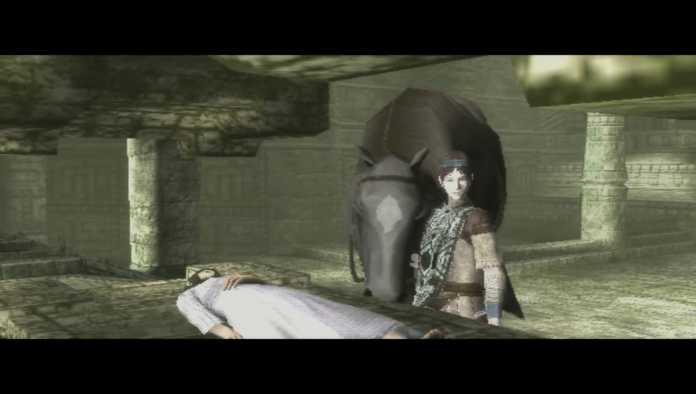
)Which, by the way, still holds true today. Because here you don't take on the role of a tough muscle man, there's no princess to rescue or alien invaders to fight back. Instead, you play the young man Wander, who brings his dead betrothed Mono to a temple to have her brought back to life. A disembodied voice promises to help him—but this help comes at a price: Wander must find and kill 16 colossi, only then will Mono return to him.
So Wander mounts his horse Agro and holds his sword in the air. It reflects the sunlight in such a way that the beam points towards the first colossus. Wander spurs Agro on, follows the beam, and soon finds his first target.
Videos by heise
Wander vs. Goliath
“Shadow of the Colossus” cannot be easily pigeonholed into a genre. The most fitting description is the vague “action-adventure,” but it also contains platformer and adventure elements. Broken down to the absolute basics, it's a “boss rush,” as there is only one task in the game world: to ride from colossus to colossus and strike them down one by one. These creatures are all modeled after beings from nature or mythology, such as minotaurs, lions, flying serpents, or sea monsters; some have two legs, some four; they walk, fly, or swim around; and some are gigantically large. Fabulously, overwhelmingly large. Hardly any player will ever forget the encounter with Valus, the first colossus in the game, whose mighty steps make the earth tremble from afar.

How is Wander, who seems like an irrelevant little insect in comparison, ever supposed to do anything against this walking skyscraper? Well, each colossus has a weak spot, magical seals where it is vulnerable. But to get there, Wander must first climb the colossus, pull himself up its fur, on bones and armor parts, must not be thrown off, and must always keep an eye on his stamina bar, which continuously decreases with ongoing effort. Once he has reached his goal, usually the colossus's head, he must repeatedly thrust his sword into the magical seals until the colossus's life essence escapes in mighty fountains and the giant is finally felled.
At the very latest in these moments, when the giant creature collapses in slow motion to melancholic choral chants, “Shadow of the Colossus” poses important philosophical questions: Can it really be right to sacrifice giant but inherently harmless creatures just to get a little closer to one's own goal, the rescue of a person? Hardly any other game tries to confront its players with these questions. In “Shadow of the Colossus,” however, the pang of conscience is an essential part of the player experience. This fight against the giant creatures is repeated again and again, getting closer to one's goal with each victory yet losing a little bit of one's humanity—something that is also reflected in the subtle visual change of Wander.

