


Data protection violation: World's immediate shutdown ordered in Colombia
Due to violations of data protection laws, the World project must cease its activities in Colombia. This is the latest in a series of setbacks.
(Image: Rokas Tenys/Shutterstock.com)
The Colombian Superintendency of Industry and Commerce (Superintendencia de Industria y Comercio, SIC) ordered the “immediate and final closure” of the World project, which was launched as the cryptocurrency project Worldcoin, in Colombia on Friday in the first instance. The authority found several violations of the country's data protection laws. “The SIC has ordered the immediate and final closure of the activities of the World Foundation and Tools for Humanity (Worldcoin) in Colombia, related to the processing of personal data through the collection of biometric data without complying with Law 1581 of 2012,” wrote the SIC on the platform X.
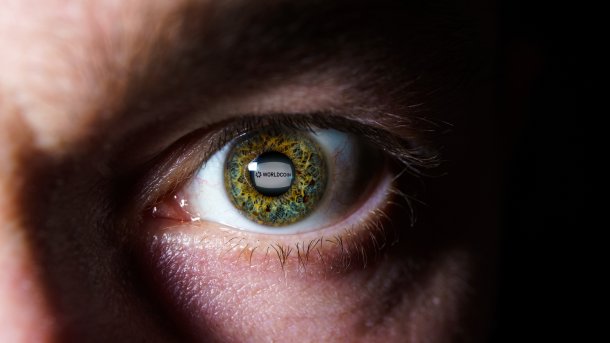
The World project, coordinated by the World Foundation, originally called Worldcoin and renamed a year ago, was co-founded by Sam Altman, CEO of ChatGPT developer OpenAI, among others. World was developed in 2019 by the private company Tools for Humanity and promises to provide a reliable and anonymous way for online human authentication with World ID. To achieve this, the iris of the human eye is converted into alphanumeric codes. In exchange for their iris, participants receive tokens of the Worldcoin cryptocurrency. The project has been active in Colombia since May 2024. Thousands of Colombians have participated.
Lack of Transparency
The Colombian supervisory authority now stated that World had influenced the will of the data subjects by offering financial incentives without providing “clear, transparent, and simple information about the specific purposes of the processing” of the collected biometric data. Furthermore, the iris images had been subjected to various processing steps without these processes, purposes, and guarantees being sufficiently clarified or disclosed. Due to five fundamental violations of Colombian law, the SIC ordered the immediate deletion of sensitive personal data, codes, and biometric templates, including the alphanumeric codes. The sanctioned companies are now prohibited from collecting personal data of Colombian residents and processing personal data in the country.
Colombian President Gustavo Petro welcomed the decision. “In Colombia, there is the right to Habeas Data. You own your data. Sensitive data like the iris of your eyes cannot simply be shared for money without you knowing how it is used,” he wrote on the platform X.
World's Rebuttal
In a statement, World announced to Forbes Colombia that it would appeal the decision. According to the company, these appeals have a suspensive effect, allowing them to continue operations during the proceedings.
World argues that “the results of the assessment are incomplete as they are based on outdated guidelines and technologies.” The company emphasizes that it does not store biometric data, that consent is informed and confirmed multiple times, and that receiving Worldcoin tokens is optional. They hope to “engage in an open dialogue with the Superintendency of Industry and Commerce to clarify how this important technology works.”
Videos by heise
Bans in More and More Countries
The decision by the Colombian supervisory authority is the latest in a series of global setbacks for World. It reflects growing concern in various countries about the use of collected biometric data. It also touches on questions about the balance between technological innovation and fundamental data protection rights in the age of artificial intelligence (AI).
Just a few days ago, the Philippine National Privacy Commission (NPC) issued a cease-and-desist order against Tools for Humanity for multiple violations of the country's Data Privacy Act. Tools for Humanity was instructed to immediately stop collecting and processing personal data in the Philippines, including the use of iris scans. Indonesia temporarily suspended the World project in May of this year following public complaints about suspicious activities. And in Brazil, World has been prohibited from offering any financial compensation for iris scans since January.


(akn)


