


London Police and Apple Clash Over Handling of Stolen iPhones
London police and Apple are clashing over how Apple handles reports of stolen iPhones. The police accuse Apple of ignoring a national database of stolen devices
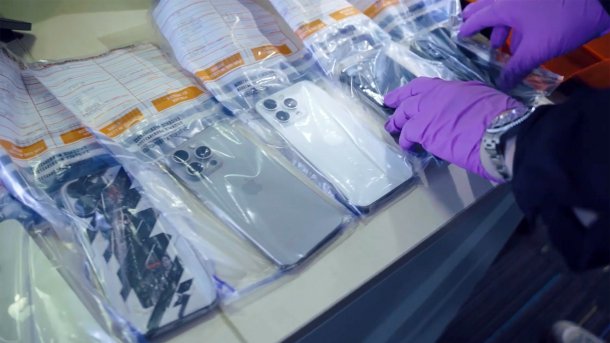
During Operation Echosteep, London police seized numerous stolen iPhones.
(Image: London Metropolitan Police)
London's Metropolitan Police and Apple are engaged in an unusual public dispute over how Apple handles reports of stolen iPhones. The Metropolitan Police accuses Apple, according to a report by "The Telegraph", of ignoring a national database of stolen devices when accepting old iPhones in trade. This, the manufacturer argues, indirectly makes it lucrative to steal devices, as they can be used as a discount when purchasing new iPhones.
According to statistics, iPhone theft is a significant problem in London. In the past year alone, 80,000 smartphones were stolen in the UK capital. 80 percent of these were iPhones. For comparison, in the previous year, the number of stolen smartphones was 64,000. Three-quarters of the devices are said to end up abroad, with 28 percent going to China and Hong Kong, where they are often "stripped" for spare parts.
The Criticism of Apple
In June, Apple accused the London police, in a hearing before MPs, of not paying enough attention to "traditional police work" in June in a hearing before MPs. Specifically, Apple expects the police to submit official requests to Apple for stolen devices, which the iPhone manufacturer would then process quickly. The police, on the other hand, expect Apple to use the National Mobile Property Register (NMPR), a national database of stolen devices.
According to "The Telegraph", mobile network operators are also joining the police's criticism of Apple. They complain that Apple does not offer a blocking function that they can apply when iPhones are stolen from their shops. Apple, meanwhile, points out that it has sufficient security mechanisms with device protection and account binding. Apple is also considering blocking the iPhone's unique IMEI number to prevent the device from connecting to a foreign mobile network. However, there is the problem that there are isolated false theft reports aimed at disabling phones via IMEI lock.
Videos by heise
Mobile Phone Theft: Professionals at Work
According to the Met, smartphone thefts in London preferably occur in the afternoons and evenings. In 28 percent of cases, devices were snatched from hands or stolen from pockets.
In October, the London police announced a major investigation success against thieves and smuggling gangs who brought up to 40,000 stolen smartphones from Great Britain to China within a year. This was part of Operation Echosteep announced by the London police in October. In this context, the police and the Mayor of London, Sadiq Khan, also called on device manufacturers to do more to combat theft.


(mki)


