


Wrong Parking Photographer as Data Sinner: A Fundamental Ruling That Isn't
The Higher Regional Court of Dresden has convicted a user of a wrong parking app for data protection violations. Is its use now illegal?
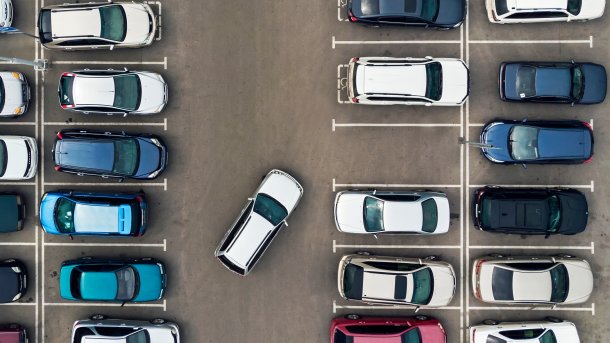
(Image: diy13/Shutterstock.com)
Are citizens allowed to photograph drivers who have parked incorrectly and, using apps like “weg.li,” not only forward the image to the authorities but also publish it? In a final ruling (4 U 464/25) now available, the Higher Regional Court of Dresden identified data protection violations in September for which the user is responsible. However, the circumstances of the case are very specific, and the reasoning likewise.

The lawsuit was filed by the passenger of a vehicle that was photographed during an alleged parking violation in the vicinity of a bus stop. The photo was not pixelated, the license plate of the Leipzig vehicle was clearly visible, and the passenger was also recognizable. In conjunction with metadata such as time, location, and car, this not only established a personal connection but also opened up the area of protected privacy.
App Fine, Photographer Lacks Basis
The court also saw the storage and publication by weg.li as order data processing—it had acted on behalf of the wrong parking photographer. Because he acted as a private individual, he could not invoke the exception for law enforcement purposes, nor did the household exception apply. According to the judges, this was not relevant “because taking a photo in public space and transmitting it to state authorities for the prosecution of parking violations does not constitute an exclusively personal-family activity.” Nor was a legitimate interest of the photographer apparent, and the argument that it was done in the public interest or to protect legitimate interests did not convince the Fourth Civil Senate in Dresden.
Videos by heise
Image Editing Mandatory for Privacy Protection
For the judges, it is clear: “The processing of the evidence photo by the defendant is decisively opposed by the plaintiff's right to informational self-determination and general personality rights in the form of the right to one's own image.” Factual and purpose-related utility could not justify the violation against a third party. The Dresden proceedings always concerned the passenger, not the driver of the car.
100 Euros in Damages Must Suffice
And for the passenger, the effort was of little use. Because in addition to the claim for deletion, he also wanted damages awarded, which the judges affirmed. 100 euros in damages were “appropriate, but also sufficient” under the circumstances of the case and considering the asserted loss of control, according to the Dresden judges.
The plaintiff can do little with the sum: he has to bear 9 percent of the court costs himself, which, given two instances and extensive correspondence, is likely to exceed the amount. The pre-litigation legal costs and the remaining 91 percent of the further legal costs that he now has to bear are significantly pricier. The Higher Regional Court did not allow an appeal to the Federal Court of Justice.
Use of Wrong Parking Apps Not Generally Impermissible
What the case shows, despite all its specifics: Even those who believe they are in the right must, at the latest when a photo is to be passed on or even published on the internet, respect the rights of others and take precautions. However, that the use of wrong parking apps or specialized platforms would be generally prohibited for data protection reasons cannot be derived from the Urteil 4 U 464/25.


(mki)

