


Analysis: Global CO₂ emissions rise in 2025 despite all progress
That humanity still manages to keep global warming below 1.5 degrees Celsius above pre-industrial levels "is no longer plausible".
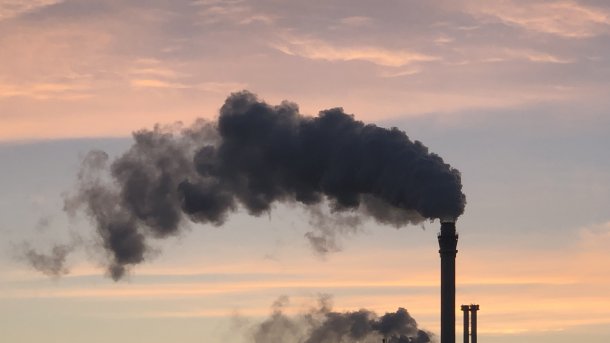
Bremen-Hastedt Power Plant
(Image: heise online / anw)
Humanity will release more CO₂ into the atmosphere this year than ever before, and limiting global warming to less than 1.5 degrees Celsius above pre-industrial levels is “no longer plausible.” These are the central statements of this year's report “Global Carbon Budget” by a large international research group led by Pierre Friedlingstein from the University of Exeter. According to the report, while CO₂ emissions in China and India have risen more slowly than in previous years, unlike before, the US and the European Union are emitting more CO₂ again this year. Only Japan, among the major economic blocs, is below the previous year's level. Emissions in the rest of the world are therefore increasing by 1.1 percent.
Drastic warnings, few bright spots
Overall, according to the report, humanity is responsible for 38.1 billion tons of fossil CO₂ entering the atmosphere this year. Although the shift away from fossil fuels is progressing in many countries, it is not enough. The renewed increase in CO₂ emissions is attributed to coal and oil as well as natural gas, with the combustion of all three substances still increasing. The researchers attribute the increase in CO₂ emissions in the US and EU, unlike in previous years, to colder weather and other factors. According to the report, emissions from land use, such as deforestation, are likely to decrease, with about half of this being offset by afforestation and similar measures.
According to the calculations, humanity can now only emit another 170 billion tons of CO₂ into the atmosphere if the global average temperature is not to exceed the pre-industrial mark by more than 1.5 degrees Celsius. This is the goal of the Paris Climate Agreement. At the current rate, this remaining budget would be used up by the end of the decade. That humanity will not exceed it is therefore no longer realistic. There are indications that ongoing climate warming is already causing the Earth and oceans to absorb less CO₂ than before. Both developments are thus reinforcing each other. The complete report is available online, and an accompanying scientific article has been published in the scientific journal Nature.
Videos by heise
The research group also points to positive results from their report. For example, 35 countries have succeeded in reducing CO₂ emissions while their economic power is growing. That is twice as many as ten years ago. The majority of these countries are in Europe, including Germany, Austria, and Switzerland. The fact that EU CO₂ emissions might grow marginally should not be overinterpreted, the group further writes. The uncertainty of the data is large enough that a decrease cannot be ruled out. Overall, EU CO₂ emissions have decreased by 2.2 and then another 2.5 percent in the past two decades, much more than in the US. In India and China, they have risen during this period.



(mho)

