


OnePlus 15: New top model with huge battery and new design
The OnePlus 15 for the global market is here. The new top model not only differs visually from its predecessor, but the battery has also grown massively.
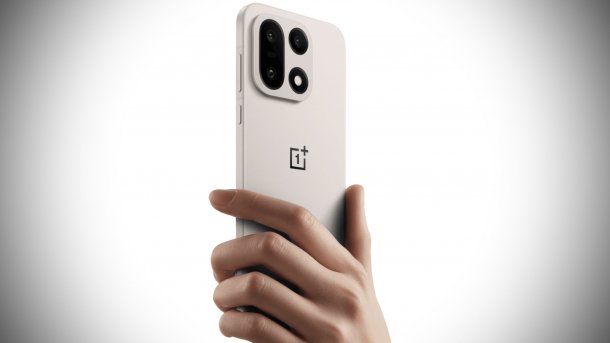
The OnePlus 15 is launching globally.
(Image: OnePlus)
OnePlus is making a big generational leap and is bringing the OnePlus 15 after the model 13 from the end of 2024. Whether this is related to the fact that 4 is an unlucky number in China, or the manufacturer wants to emphasize a big development leap, OnePlus does not reveal. Purely from a design perspective, the differences to the predecessor are clearly visible: the new smartphone is generally more angular and the camera element is no longer round, but is reminiscent of Google's camera form of the Pixel 10 Pro Fold. It also evokes a bit of an iPhone feeling. The first OnePlus model in this design language was the 13T, which did not make it to Europe.
165 Hertz Display
The LTPO OLED display of the OnePlus 15 is flat and has a diagonal of 6.78 inches. The screen has a resolution of 2772 × 1272 pixels instead of the 3168 × 1440 pixels (QHD+) of its predecessor, which was also slightly larger at 6.82 inches. The manufacturer justifies the reduction in resolution by stating that it is not technically possible at present to operate a QHD+ screen at 165 Hz. Furthermore, the company says that the new screen is more expensive than the display of its predecessor. The OnePlus 13 has a maximum refresh rate of up to 120 Hz.

(Image: OnePlus15)
Furthermore, the display supports a dynamic refresh rate of 1 to 165 Hz and a maximum brightness of 1,800 cd/m², which can be dimmed down to a minimum of 1 cd/m². It is also framed by a 1.15 mm thin, symmetrical bezel. An ultrasonic fingerprint reader is housed under the screen, a technology that is becoming increasingly widespread. It is considered safer and faster than the often-used optical fingerprint scanners.
The smartphone is also protected against dust and water by Gorilla Glass and according to protection classes IP69 and IP69K. IP69K is the highest protection class for devices, signaling complete protection against dust, dirt, and water, even with high-pressure and steam jets at high temperatures.
Videos by heise
Action Button Instead of Alert Slider
OnePlus has removed the classic alert slider – as it did with the OnePlus 13T – and replaced it with a multifunction button. The button is similar to Apple's Action Button, which can also be used to mute, but it can also be assigned to other (AI) functions and quick accesses, such as opening the camera, turning on the flashlight, or other things.
Under the hood, the OnePlus features Qualcomm's top chip Snapdragon 8 Gen 5 Elite, which is accompanied by 12 or 16 GB of LPDDR5X RAM and 256 or 512 GB of UFS 4.1 storage, respectively. The processor is also used in the Xiaomi-17 series. It is also said to be included in Samsung's Galaxy S26 family – at least in the Ultra model, a slightly overclocked version of the processor with the addition "for Galaxy" is expected.
Another special feature of the OnePlus 15 is the dual-cell battery with silicon-carbon anodes, which has an impressive capacity of 7300 mAh. This makes it similar in size to that of the Oppo Find X9 Pro, which has a 7500 mAh battery on board. Despite the large battery, the smartphone is only 8.1 mm thick – thinner than the Find X9 Pro, which measures 8.25 mm. The OnePlus 13 with a 6000 mAh battery was even thicker at 8.5/8.9 mm (depending on color). Should the battery, which is expected to last up to two days, run low, it can be recharged wired at up to 120 W or wirelessly at 50 W.
Cameras without Hasselblad
While sister company Oppo continues its partnership with Hasselblad, the OnePlus 15, after the cooperation expired, does without the well-known lettering of the camera specialists on the camera element. OnePlus relies instead on Oppo's Lumo image processing engine, which OnePlus has renamed DetailMax.

(Image: OnePlus)
OnePlus uses three sensors for the cameras, all of which offer a resolution of 50 MP. The wide-angle camera has a Sony sensor with optical image stabilization (OIS) on board. The other two sensors are an ultra-wide-angle (f/2.8) and a telephoto lens (f/2.6) with 3.5x optical zoom and OIS. The front camera has a 32 MP sensor.
On the software side, OnePlus' OxygenOS 16 is used, which is based on Android 16. According to the manufacturer, the new software version is said to improve overall system performance and has additional functions on board. The OS provides, among other things, optimized animations, a revised user interface, and new AI-powered functions that are intended to make operation more intuitive and increase efficiency in everyday life, it is said.
In terms of software updates, the new model will receive four major Android upgrades and five years of security updates. This means OnePlus cannot keep up with Google and Samsung, who promise up to seven years.

(Image: OnePlus)
The new top smartphone from OnePlus will be offered in three colors: Black (Infinite Black), Beige (Sand Storm), and Light Purple (Ultraviolet). Prices start at €950 for the variant with 12 GB RAM and 256 GB flash storage; this is only available in black; the model with 16 GB and 512 GB costs €1050 and will be sold in all three colors. Until December 12, 2025, the manufacturer is offering the model with larger storage at a €100 discount for just under €1000.


(afl)


