


Meta Hyperscape: Photorealistic 3D scans now with multiplayer function
Previously, it was only possible to visit your own Hyperscans. Now Meta is introducing the ability to invite other people into the VR environments.
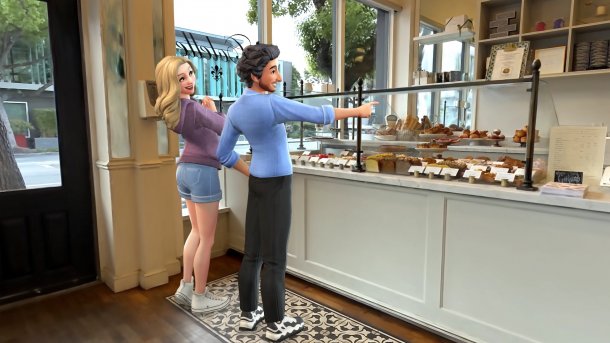
Hyperscape becomes social: An update allows VR replicas of real places to be visited together.
(Image: Meta)
With Meta Quest 3, since September, rooms and entire environments can be scanned and processed into astonishingly realistic digital copies that can be visited later in virtual reality. The scanning process takes about 15 minutes and requires no technical prior knowledge or special equipment. Even outdoor spaces and landscapes are impressively captured, as our Hyperscape test showed.
Until now, only the creators of Hyperscapes could visit them. Now Meta is rolling out a multiplayer function that allows users to invite other people into their own Hyperscapes, such as their apartment.
To achieve this, open the Hyperscape app, select a Hyperscape, and invite family or friends directly or via a link. VR users need a Meta Quest 3 or Meta Quest 3S and appear as Meta avatars. Alternatively, you can visit the Hyperscape via the smartphone app “Meta Horizon,” so a VR headset is not strictly necessary. The creators of a Hyperscape can revoke invitations at any time.
Hyperscapes are now rendered on Quest 3
Technically, the update holds some surprises: Hyperscapes are no longer rendered in the cloud and streamed to the VR headset but calculated locally on the Quest device. This reduces latency and no longer requires a fast internet connection.
Important for privacy reasons: The initial processing of the scan data into Hyperscapes still takes place on Meta's servers. Those who do not want to share their private spaces with Meta should be aware of this.
Videos by heise
The local rendering of Hyperscapes is made possible by Meta's new Horizon Engine. The Hyperscapes thus become private destinations of Meta's metaverse platform, “Horizon Worlds.” Up to eight people can be in a Hyperscape simultaneously, and Meta is working to increase this number in the future.
In addition to local rendering, Meta has fulfilled two more wishes that we expressed in our Hyperscape test: for even more immersion, you can now move smoothly through the Hyperscapes using the analog stick instead of just by teleportation. Furthermore, audio is now supported, although it is still unclear how the audio component is implemented and whether background noise is recorded during scanning.

The update is being rolled out to users gradually, and it may take some time before everyone receives it. Hyperscapes created before the update can still be visited but not shared with other users. Only newly scanned locations offer the multiplayer function.
The next step: Hyperscape becomes a platform
The ability to easily capture entire rooms with a VR headset and then render them in high quality is currently unique in the VR market.
Meta sees Hyperscape worlds as a way to make the metaverse more attractive. And it's easy to see how such an application could be valuable not only for preserving memories and for social activities with spatially distant family members and friends, but also for tourism, real estate, education, and museums. For this to happen, however, Meta's app would first have to become a platform so that Hyperscapes can also be shared publicly. Over time, Hyperscape could thus become a YouTube for 3D scans of real places.
For scanning and sharing Hyperscapes, the Hyperscape app from the Meta Horizon Store is required.


(mack)

