


Microsoft confirms problems after July updates for Windows 11 24H2
Microsoft admits to problems after installing July updates for Windows 11 24H2 – especially for non-persistent installations.
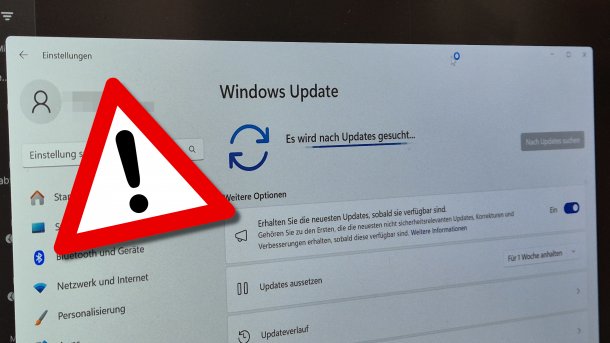
(Image: heise online / dmk)
Microsoft has admitted to annoying problems after installing the security updates from July or newer in Windows 11 24H2. These are particularly noticeable in non-persistent Windows installations.
This is explained by Microsoft in a support article. “After provisioning a PC with a cumulative update from July 2025 or newer for Windows 11 24H2 (KB5062553), various apps such as StartMenuExperiencehost, Search, SystemSettings, Taskbar, or Explorer may experience difficulties,” Microsoft writes there. This occurs after the first user login after applying the update – and for all user logins on non-persistent operating system installations, such as in a virtual desktop infrastructure (VDI) or similar environments where app packages must be installed with each login. Non-persistent installations are common in large organizations where a high degree of personalization of the Windows desktop is not required and where users can log in at different workstations.
Symptoms and error messages
The errors typically occur after updates to included dependency packages that contain XAML components. Then some components may fail to start and display error messages on the screen. These include Explorer.exe, ImmersiveShell, ShellHost.exe, or StartMenuExperienceHost. In addition, application crashes may occur when initializing XAML views, or the Explorer may run without displaying an entry in the taskbar. Specifically, Explorer crashes can be observed, the Start menu does not open and displays a critical error message, the system setting "Start"—"Settings"—"Systems" simply does not start without further feedback, or ShellHost.exe crashes.
Videos by heise
Microsoft has now found and confirmed the cause of the problem. The affected apps have dependencies on XAML packages that are not registered in time after the update is installed. While Microsoft is working on an automatic solution for the issue, it provides hints in the support article on how IT administrators in affected environments can help themselves.
This includes manually registering the missing packages in the user session and then restarting SiHost. Microsoft provides three commands to handle the registration. In addition, Microsoft provides a PowerShell script for non-persistent environments. Admins should run this as a log-on script.


(dmk)


