


Android: Google enables live video streaming to emergency call centers
Google has introduced a new security feature for emergencies that allows emergency call centers to request live video streams from Android devices.
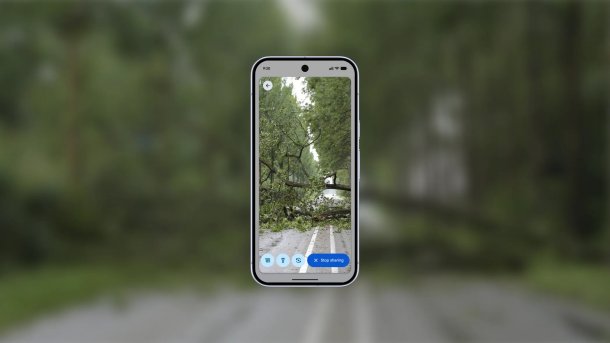
Google is introducing a new function for emergencies called "Android Emergency Live Video".
(Image: Google)
According to Google, the new emergency function "Android Emergency Live Video" will be provided for all Android smartphones from Android 8 via the Play services. The company states that the function will be introduced in "selected regions of Germany", among others. With this, Google is expanding the existing emergency services of the mobile operating system, such as emergency location service, accident and fall detection, and satellite SOS.
According to Google, the "Emergency Live Video" function is intended to help emergency responders get a better picture of the emergency situation. This is because it can be difficult for those affected on site to "accurately describe what is happening, especially when stressed or in danger". This could be helpful in numerous emergency situations – whether it is "a car accident, a medical emergency, or a rapidly spreading wildfire".
Videos by heise
Release on request
As Google explains in the announcement, the function can be used by a dispatcher during an emergency call or an emergency SMS. To do this, they send a request to the phone from which the emergency call was made, asking to share a live video.

According to Google, the function requires no prior setup and is ready to use immediately. It can stream a live video of the situation with a single tap via the smartphone camera. This way, emergency services can quickly assess the situation and provide the right help to those affected, according to Google. The video function is also intended to guide first responders through life-saving measures such as cardiopulmonary resuscitation until help arrives, according to the company.

(Image: Google)
The company further explains that the function is encrypted by default. In addition, users have control over whether they want to share a video. Sharing can be stopped at any time.
Google says the function is available immediately in the USA and in selected regions in Germany and Mexico. The company has not yet revealed which regions are involved. According to its own statements, Google is working with rescue organizations worldwide to expand the function to more regions.


(afl)

