


Hazardous e-waste: Environmental aid demands deposit on high-energy batteries
Due to missed collection quotas and growing fire hazards from lithium-ion batteries, environmental activists are demanding a reversal in disposal policy.
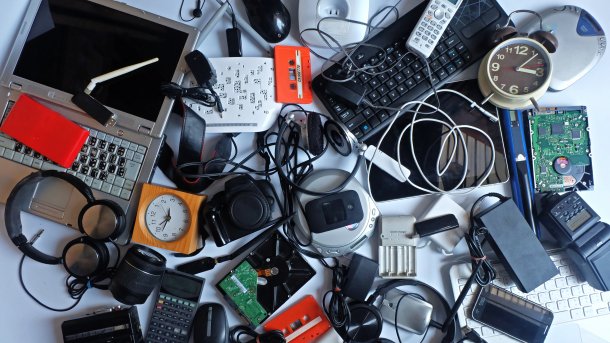
(Image: DAMRONG RATTANAPONG/Shutterstock.com)
The German Environmental Aid (Deutsche Umwelthilfe, DUH) is concerned about the safety of hazardous energy storage devices. According to the civil society organization, the fire hazards posed by high-energy batteries in particular present enormous challenges for disposal companies and municipalities. While the latest reform of the Electrical and Electronic Equipment Act, which comes into effect in July 2026, stipulates that old appliances may only be accepted at recycling centers under the supervision of trained personnel according to the so-called counter model. However, a comparable safety solution is currently completely lacking for retailers.
To close this gap and simultaneously increase return rates, the DUH is calling for the introduction of a comprehensive deposit system for high-energy batteries. Only a financial incentive can ensure that the fire-hazardous lithium-ion energy carriers are returned in a controlled manner, it states. Otherwise, they will be stored in basements or cause potentially dangerous fires in garbage trucks and sorting plants.
High-energy batteries are characterized by their maximum energy density, enabling a long operating time for applications such as electric cars or smartphones with minimal weight and volume. Unlike high-performance batteries, their focus is less on rapid discharge currents and more on efficiently storing large amounts of energy over long periods. Solid-state batteries and lithium-sulfur batteries also belong to the group of high-energy batteries.
Videos by heise
Retailer demand also for e-cigarettes
The organization also sees an urgent need for action in the area of disposable e-cigarettes and tobacco heaters. Without a clear financial incentive such as a deposit, the planned take-back obligation for retailers is likely to be largely ineffective, as the products will continue to be disposed of via household waste or in the environment. The DUH welcomes the Federal Government's announcement of a general ban on disposable vapes in principle. At the same time, however, it urges the immediate implementation of this plan via the Tobacco Products Ordinance in order to put an end to resource waste and disposal risks in a timely manner.
The environmental activists justify their insistence on stricter measures with a sobering assessment of the collection efforts to date in Germany. In 2023, based on the latest available official figures, the collection rate for old electrical equipment was only 29 percent. This means that the legal target of 65 percent has been drastically missed for the sixth time in a row.
Hold manufacturers and retailers accountable
DUH Federal Managing Director Barbara Metz primarily blames the lack of liability for manufacturers and retailers. Since failing to meet quotas has so far had no legal consequences, the industry lacks the incentive to make returns truly customer-friendly and attractive for consumers. The environmental aid organization therefore calls for manufacturers to be legally obliged to comply with the requirements. Only this will build the necessary pressure for an active information policy and better return systems.
The legal adjustments due in the coming year, which include a uniform collection point logo and obligations to provide information on separate collection directly on the product, are considered important steps by the DUH. However, these are far from sufficient. A major obstacle remains the accessibility of return points. Current exceptions, which are based on the sales area of the stores or the size of the devices, mean that many retailers do not have to accept any old appliances.
The DUH therefore advocates for a take-back obligation for all electronics retailers, regardless of store size. In addition, the edge length for devices that can be returned without a new purchase should be increased from the current 25 to 50 centimeters. Only with such a combination of financial incentives, strict quotas, and barrier-free access to disposal can the circular economy for e-waste finally function.


(jpw)


