


Power supply: Germany revisits Habeck's gas power plan
The EU Commission and Germany's Minister of Economic Affairs have agreed on a power plant strategy. She now wants to accelerate things.
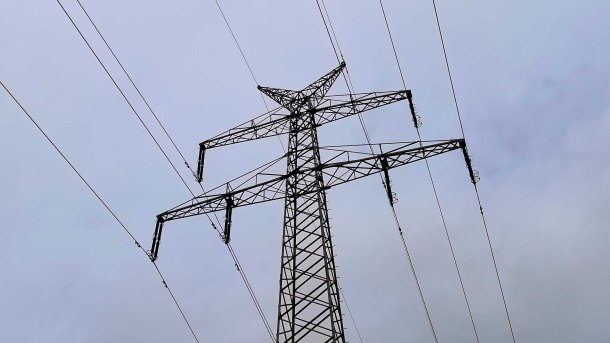
Power line in Bremen
(Image: heise online / anw)
Germany is largely sticking to its previous plans for its power supply – as shown by the agreement between the EU Commission and Minister of Economic Affairs Katherina Reiche (CDU). After months of negotiations, it is now clear that the federal government will deviate very little from what the previous government planned.
It is a major goal: Germany is to be decarbonized. Despite the expansion of solar and wind power, renewable energies are not sufficient for the foreseeable future, at least during periods of prolonged calm and darkness. This is especially true when both car drivers and industry switch to electricity. This is the assumption – simplified – of the Federal Ministry for Economic Affairs and Climate Action, which is responsible for energy policy. By 2035, Germany will need more electricity generation capacity, also due to the coal phase-out. The type of electricity sources that are easily controllable and only switched on when needed has been intensively discussed in recent months.
Because state guarantees are involved, the EU Commission must approve the German plan. And it clearly rejected the federal minister of economic affairs' original plans to build gas power plants with a capacity of 20 gigawatts. After months of negotiations, there is now an agreement on the so-called power plant strategy. Reiche scales it down: "With the short-term tenders for twelve gigawatts of new, additional controllable capacity, we are also creating the basis for a secure power supply in Germany for the future," says the minister.
Power plant capacities of this magnitude are to be tendered as early as 2026. The federal government's contracts with potential operators will run for 15 years.
H2-ready criterion remains, conversion later
Ten gigawatts of this must not only be available by 2031 but also be capable of supplying electricity continuously for extended periods. Smaller storage units are therefore ruled out from the outset. However, according to the Ministry of Economic Affairs, the aggregation of capacities should be permissible: several smaller plants could bid together. There is much to suggest that the ten gigawatts of capacity will primarily come from new gas power plants.
The new gas power plants are all to be "H2-ready", i.e., capable of being operated with hydrogen. The switch is to begin gradually from 2040 at the latest, and Reiche also wants to stop burning natural gas from 2045. This is significantly later than planned in the earlier power plant strategy of the "traffic light" Minister of Economic Affairs Robert Habeck, which Reiche rejected: he also planned twelve gigawatts of additional capacity for 2024, which was to be gradually converted to hydrogen eight years after its construction – i.e., from around 2035. Habeck's plans were shelved due to the premature end of the government.
Videos by heise
Currently, there is a lack of generation capacity for hydrogen that could be used for the conversion. The establishment of the so-called hydrogen core network, which is intended to transport the energy carrier safely through Germany and at least partially replace the existing natural gas infrastructure, is also still in its infancy. With the agreement now reached, the new federal government is also committing to hydrogen.
Demand control yes, load shedding no
Germany will tender an additional two gigawatts in a technology-neutral manner. Storage networks could be considered for this, as could virtual power plants with minimum generation capacities. Details on this are to be published by the Ministry of Economic Affairs, but capacity guarantees through load shedding ("Demand Side Response") will not be eligible for funding.
The minister sees her power plant strategy as a "starting point for comprehensive, technology-neutral capacity markets". The agreement with the EU Commission upholds the phase-out of coal-fired power generation in 2038 and the phase-out of fossil fuel power generation in 2045. Germany still has to formally submit the plans to the EU Commission.


(ds)


