


France vs. Social Media: Ban on use under 15 is on shaky ground
France's National Assembly wants to ban teens from TikTok & co. But the EU Digital Services Act and country of origin principle hold Paris back.
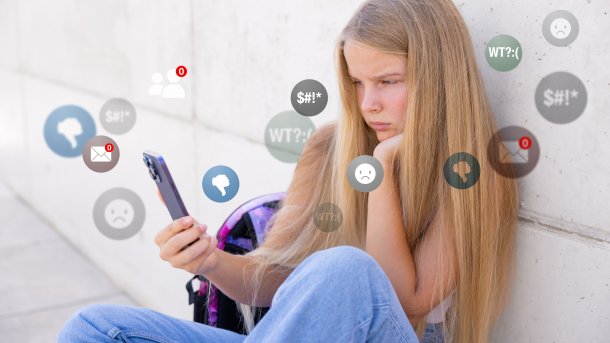
(Image: Shutterstock.com/ Kaspars Grinvalds)
France's National Assembly has sent a signal and adopted stricter rules for the protection of minors in the digital space. The core of these rules is a ban on the use of social media for children under 15 years of age, as well as an extension of the mobile phone ban in schools up to the upper secondary level. President Emmanuel Macron hopes for implementation by the next school year, but legal experts are tempering the euphoria. Behind the determination lies a complex legal tug-of-war between national sovereignty and EU law, which could cause the initiative to fizzle out.
This dispute is not just about a pedagogical debate on screen time, but about a decision-making process for regulating the digital single market. French politics prioritizes the protection of children's mental health. However, the question is no longer just whether social media is harmful to 14-year-olds, but who is entitled to restrict access to it in a borderless internet.
EU Regulation as a Legal Hurdle
The main problem for the French legislator is the Digital Services Act (DSA). This EU regulation aims to harmonize the law fully for digital intermediary services. Its provisions therefore take precedence over national unilateral actions. As Tobias Gostomzyk from TU Dortmund explains to the Science Media Center (SMC), the DSA obliges platforms to implement comprehensive safety measures for minors. However, it does not provide for a general ban on use. A national law that goes beyond these EU requirements is therefore on shaky legal ground.

The EU Commission has itself already published guidelines that provide for methods of age verification. However, these primarily serve to implement the existing level of protection and are not a blank check for national bans.
Between Country of Origin Principle and Civil Law Loopholes
Another stumbling block is the country of origin principle of the E-Commerce Directive. It states that a digital service provider is generally only subject to the laws of the country in which it has its headquarters. Since industry heavyweights like Meta, TikTok, or Google have their European headquarters almost exclusively located in Ireland, French regulatory power encounters geographical limits here. A law that would only bind companies based in France would be practically useless: the relevant platforms are not subject to French jurisdiction here at all.
To circumvent this hurdle, France is relying on a legal trick that Stephan Dreyer from the Hans-Bredow-Institut describes as an "indirect regulation." Instead of imposing a direct media law ban on platforms, contracts with underage users are to be declared void under civil law. The goal is to increase the liability risk for providers in data processing to such an extent that they "voluntarily" introduce age checks. Whether this workaround will hold up would have to be decided by the European Court of Justice, if necessary.
Risks for Youth Protection and Digital Evasion Tactics
Critics like Dreyer also point out that strict age limits could even be counterproductive. If young people are officially banned from major platforms, the operators would likely scale back their hard-won youth protection functions and awareness teams. After all, according to the law, no minors should be present there anymore.
Videos by heise
Furthermore, there is a risk that young people will switch to less controlled niche offerings or use technical workarounds such as Virtual Private Networks (VPNs) to bypass geographical restrictions. A comprehensive age verification system would also affect not only children but all internet users. This raises significant constitutional questions regarding proportionality and data protection. After all, access to information and communication platforms would suddenly require the processing of sensitive identification data or biometric characteristics of millions of citizens.
Despite the massive legal objections, the French initiative could set a precedent. Similar demands for a social media ban are being voiced worldwide, from Australia to Great Britain. Within the EU, too, pressure is mounting: the European Parliament already called for a minimum age of 16 in November. The more member states dare to take unilateral action, the more likely it is that the EU Commission will adjust the DSA accordingly.


(hag)

