


Demolition ball for freedom of speech: Criticism of Merz's anti-anonymity course
The Chancellor calls for an "open visor". However, experts and the opposition see this as dangerous populism that ignores the causes of online hate.
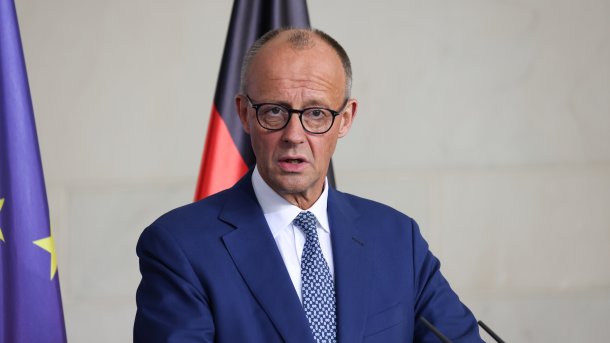
(Image: EUS-Nachrichten/Shutterstock.com)
A proposal from the government headquarters could shake the foundations of anonymous communication. Chancellor Friedrich Merz (CDU) is strongly pushing for a real name obligation on the internet. He argues that anyone who critically engages with society or the country should do so under their real identity. The goal seems clear: a return to decency by abolishing the digital masquerade. But what sounds like a simple solution against hate and agitation in theory turns out to be a digital policy minefield upon closer inspection. According to experts, this could endanger democracy rather than protect it.
Experts and civil rights activists are sounding the alarm. IT security consultant Manuel Atug considers the demand not only populist but even dangerous. In an interview with WDR, he emphasized that the Basic Law protects the right to anonymous statements. This is a cornerstone that is indispensable in a functioning democratic society. A real name obligation would effectively undermine this right for the broad civil society without reaching the actual target groups.
“At the same time, criminals will always find a way to remain anonymous,” Atug points out. “Because they simply don't adhere to laws, and therefore a real name obligation won't interest them either.”
The technical feasibility is questionable anyway. Opponents of an ID requirement for the internet draw comparisons to authoritarian systems. To enforce such a requirement comprehensively and tamper-proof, a surveillance structure would have to be created, such as is otherwise only known from China. Instead of symbolic politics, experts like Atug are calling for a strengthening of the investigative authorities. They must be empowered to effectively apply existing powers. Because a paradox of the current situation is: many online crimes are already committed under real names today, but are hardly prosecuted due to a lack of resources or technical expertise of the authorities.
Algorithms as the true arsonists
Scientific studies support the skepticism towards the Merz plan. Studies repeatedly show that anonymity is not the main driver of online aggression. A Swiss study, for example, shows that a tiny fraction of only five percent of users is responsible for a whopping 78 percent of hate comments. Even clearer results were brought by an analysis of Twitter (now X) back in 2021: Here, 99 percent of the authors of hate messages were already identifiable.
A real name obligation would therefore hardly slow down these “haters”, but would expose the vast majority of peaceful users to massive risks. Especially women and marginalized groups, who are already targets of digital violence, would have to fear for their physical safety if they were de-anonymized.
The cause of the coarsening lies deeper, namely in the engine room of the major platforms. The recommendation algorithms of networks like X, Facebook, or TikTok reward emotionalization and hate, as these generate interaction and thus advertising revenue. EU MP Alexandra Geese (Greens) therefore calls for a European response instead of national solo efforts. She appeals to Merz to work with France and Spain to consistently enforce the Digital Services Act (DSA). Europe must force operators to “reform toxic algorithms.”
Videos by heise
Alternative solutions
Within the political landscape, the echo is divided. CSU politicians like Markus Söder and parts of the Free Voters, such as Bavarian Digital Minister Fabian Mehring, see the real name as the only weapon against troll factories and AI-driven disinformation.
However, resistance is brewing within the governing coalition partner, the SPD, and in the opposition. Johannes Schätzl, digital policy spokesperson for the SPD parliamentary group, refers to the protective space of anonymity. This, he says, is vital for whistleblowers or people in personal crises. Federal Minister of Justice Stefanie Hubig (SPD) also advocates that anonymity on the internet must remain fundamentally possible. The Social Democrats are relying on the EUDI Wallet. This will make it possible from 2027 to identify oneself to platforms as a “real person” without revealing one's entire identity to everyone.
Particularly sharp criticism comes from Donata Vogtschmidt, spokesperson for the Left Party in the Bundestag's Digital Committee. She accuses the Chancellor of an “unobjective position detached from the facts.” In her view, a real name obligation would elevate state surveillance to a new level and give authoritarian forces dangerous tools.
“I would have expected such a proposal from Iran, Russia, or China,” Vogtschmidt wonders. “That it comes from our Chancellor shows the tact of a demolition ball.” The renewed resurgence of the age-old debate suggests that the desire for more civility online is consensus-capable. However, according to observers, abolishing anonymity hits the wrong people. Platform operators and their algorithms would largely be let off the hook.



(mma)

