


Report: US Government Intensifies Fight Against Data Sovereignty Initiatives
Washington is taking a more confrontational approach to data privacy regulations in other countries. The US Secretary of State is sending an internal dispatch.
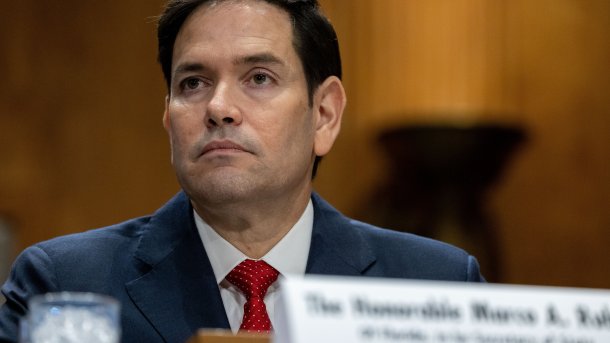
(Image: Maxim Elramsisy/Shutterstock.com)
The US government under President Donald Trump has internally instructed its diplomats to push back against attempts by governments to regulate how US technology companies handle the data of their respective citizens. This was reported exclusively by the news agency Reuters on Wednesday.
In an internal diplomatic dispatch dated February 18, signed by US Secretary of State Marco Rubio, which Reuters has seen, it states that data sovereignty or data localization initiatives would "disrupt global data flows, increase costs and cybersecurity risks, limit artificial intelligence (AI) and cloud services, and expand government control in ways that could undermine civil liberties and enable censorship." It further states: The US government is pushing for "a more assertive international data policy"; diplomats should "counter unnecessarily burdensome regulations such as data localization requirements."
Washington's More Aggressive Stance
Experts interviewed by Reuters view the move by the U.S. State Department as a sign that the Trump administration is returning to a more confrontational approach in the face of efforts by some countries to restrict the processing and storage of their citizens' personal data by US tech giants. Data sovereignty initiatives have gained momentum, particularly in Europe, against the backdrop of increasing geopolitical tensions between the European Union (EU) and the United States. In Brussels and numerous European capitals, there are growing concerns about data protection and surveillance, given the dominance of US companies in the field of AI. To operate their models, companies like OpenAI, Anthropic, Google, and others rely on vast amounts of personal data, including that of European citizens.
The regulatory efforts, in turn, could prompt Washington to adopt a more aggressive stance, believes Bert Hubert, a Dutch cloud computing expert and former member of the supervisory board of Dutch intelligence services. "While the previous US administration tried to win over European customers, the current administration is demanding that Europeans ignore their own privacy regulations that could hinder American companies," he told Reuters.
Red Flag: European Data Protection Laws
The EU's General Data Protection Regulation (GDPR), for example, governs how personal data of EU citizens may be processed and sets strict requirements for companies that store and use this data. This includes restrictions on the transfer of data of European citizens abroad. US technology corporations have been hit with hefty fines for violations.
According to Reuters, Secretary of State Rubio's dispatch explicitly names the GDPR as an example of a regulation that imposes "unnecessarily burdensome restrictions on data processing and requirements for cross-border data flows." The cable, titled "Call to Action," accordingly urges US diplomats to pursue the development of proposals to restrict cross-border data flows. It also provides talking points to promote the Global Cross-Border Privacy Rules Forum, launched in April 2022 by the United States, Mexico, Canada, Australia, Japan, and other countries, an initiative to promote trusted cross-border exchange of personal data.
Videos by heise
Increasing Confrontation
Washington's approach is not new. Rubio's letter is the latest in a series of initiatives aimed at thwarting European regulation of the digital sphere and reflects increasing confrontation. The US government has long called for changes to strict EU digital laws, which aim to prevent the spread of misinformation via platforms like X and also affect companies such as Amazon, Apple, Meta, Google, or Microsoft. The EU's Digital Services Act (DSA) has repeatedly been called a censorship tool by Washington.
At the end of December, the US government imposed entry bans on four European activists against online hate speech and former EU Commissioner for Internal Market Thierry Breton, who is considered a mastermind of the EU digital laws. At the beginning of the year, there were reports that the EU plans to enforce the Digital Services Act (DSA) and the Digital Markets Act (DMA) more strictly. Further potential for conflict arises from a media report last week that the US government is preparing an online portal that would allow EU citizens to access content that is blocked in their home countries. This includes posts classified as hate speech or terrorist propaganda.


(akn)


