


Interview: How brain stimulation aims to alleviate depression
Transcranial direct current stimulation has been in use for years. How the "Flow" headset aims to end its niche existence.
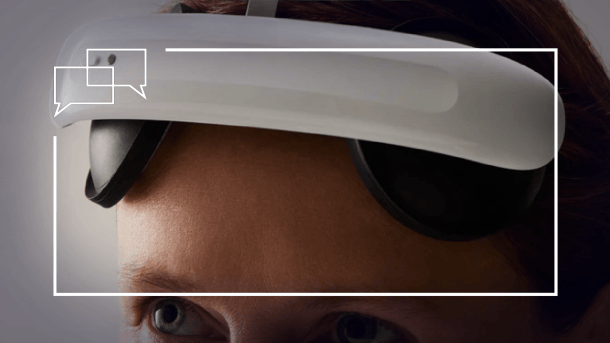
(Image: Flow / Bearbeitung heise medien)
Depression is one of the most common mental illnesses – in Germany alone, over five million people are affected annually. However, not everyone responds to antidepressants, and many discontinue therapy due to side effects. Transcranial direct current stimulation (tDCS), which has been in use in a medical context since 1990, initially primarily in clinics and research centers, can offer an alternative.
But “Flow FL-100“, a class IIa medical device, aims to bring stimulation into the home living room. It is designed to specifically stimulate the prefrontal cortex, thereby alleviating depressive symptoms. In the USA, the FDA has approved the device as the first prescription-based home headset for depression. We spoke with Phil Ritter, CEO of the German subsidiary Flow Neuroscience, about Flow.

(Image: Ritter)
tDCS has been known in clinical research for over 20 years. Why are you now bringing this technology to market as a headset for home use?
Our goal was to make the device more accessible. We see tDCS as the “little brother” of transcranial magnetic stimulation (TMS), which can only be performed in clinics with large equipment. The supply situation for mental illnesses is strained: waiting times for therapy appointments are long, and medication is not the right or sole solution for everyone. We wanted to build a bridge. The headset allows patients to use an evidence-based, clinical method safely and independently at home – without having to wait months for an appointment.
Videos by heise
A common misconception is that such technologies are intended to completely replace conventional therapies or antidepressants. Is that your goal?
No, not that. Depression is a complex illness with many causes. There is no single magic bullet. We are deliberately positioning Flow as another pillar in the spectrum of treatment. It can be used as monotherapy, but our data shows that it is also very effective in combination with antidepressants or psychotherapy – remission rates even increase in combination.
We aim to provide doctors and patients with another tool. For example, if a patient does not want or cannot take medication due to side effects – such as for family planning or due to loss of libido – we offer a chemical-free alternative. But we do not want to displace pharmacotherapy; rather, we want to meaningfully expand the therapeutic offerings.
You are currently approved as a medical device for the treatment of depression. However, in our conversation, you also mentioned effects on sleep and concentration. Where is the journey heading?
We use the so-called MADRS scale (Montgomery-Åsberg Depression Rating Scale) for progress monitoring. This scale not only assesses mood but also factors such as insomnia, concentration, inner restlessness, and appetite.
We observe in the data that stimulating the prefrontal cortex through tDCS often has positive effects precisely in these areas: patients report that they sleep better or can refocus. For us, this is a strong signal for the future. We are currently investing heavily in research to determine whether we can also prove efficacy in isolation for anxiety disorders, sleep problems, or concentration deficits. Currently, we are purely a depression therapy device, but in the long term, we see the potential to also address these comorbid symptoms specifically.
That sounds like a move towards “Health & Wellness” and self-optimization. Are the lines blurring there?
The line between medical device and “Health & Wellness” will certainly become blurrier in the next five to ten years. However, we deliberately chose the harder, medical path. We could have marketed the device as a lifestyle gadget for “better thinking.” But we wanted scientific credibility.
Patients suffering from mental distress need certainty, not empty promises. If we ever make claims about sleep or concentration, it will only be when we have the same hard evidence base for them as we do now for depression.
The mere act of taking 30 minutes for oneself each day, putting on the device, and following the app's instructions establishes a positive routine. For people in a depressive episode, who often lose all structure, this is enormously valuable. It's a form of self-efficacy: “I am actively doing something for my recovery.” This behavioral therapy aspect supports the neurophysiological effect of the current.
You are working on a further development of the technology that not only stimulates the brain but also “reads” it.
Correct. Our long-term goal is even greater personalization. We are working on integrating EEG technology into the headset. The idea is that the device can measure brain activity to predict how well a person will respond to stimulation.
Currently, we usually know after the three-week activation phase whether the therapy is working – it does for about 77 percent. With EEG data and AI support, we might be able to detect this “response” much earlier or individually adjust the stimulation protocol. This would make treatment even more efficient and targeted.
What about cost coverage?
Currently, patients mostly pay the approximately 459 euros themselves. We are working intensively to get into standard care. In Great Britain, the NHS is further ahead and uses Flow in many areas. In Germany, we are in discussions with the G-BA (Federal Joint Committee) and health insurance companies. The system here is a bit slower and is currently examining whether specific trial studies are still necessary for the German market. Even though the international data – including a large study in Nature Medicine and new data from LMU Munich – is very clear.
However, we hope to become a statutory health insurance benefit in the long term. Until then, we rely on rental models and collaborations with clinics to keep access as low-threshold as possible.


(mack)


