


China tests underwater cable cutter: Concern over sabotage
A Chinese research vessel successfully tested a deep-sea cable cutter. The technology could also be used for sabotage.
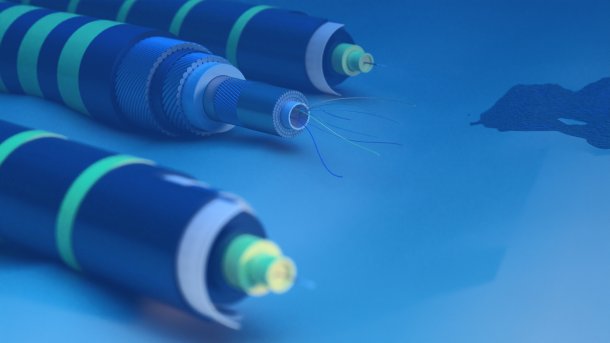
(Image: Siwakorn TH/Shutterstock.com)
A Chinese research vessel has successfully tested cutting a cable at a depth of 3500 meters using an electro-hydrostatic actuator (EHA). This allows for repairs to be made with significantly less effort. While Chinese state media celebrate this as a major advancement in the construction and maintenance of cables and pipelines, it is causing concern in Western countries and Taiwan. They fear the technology could easily be used to sabotage underwater data cables.
According to the state news agency Xinhua, the “Haiyang Dizhi 2” tested an autonomous underwater vehicle called “Hai Ma”, recovered 16 self-developed measuring probes, and deployed the first Chinese deep-sea winch with 11,000 meters of coaxial cable during its 30-day mission, in addition to testing the cutting tool.
New Technology Saves Enormous Time
What makes the cutter special is its lack of an external oil line, which is necessary for conventional systems. Instead, the EHA integrates the hydraulic system, electric motor, and control unit into a compact, self-contained device, making it more suitable for use at greater depths. The device could potentially also be mounted on small, unmanned underwater vehicles. Until a few years ago, cutting an offshore pipeline at great depths took several hours. The new technology reduces this time to a fraction, it is said.
Videos by heise
Experts fear a dual-use potential for the new technical achievement. While China emphasizes that it only intends to use the device for civilian purposes, it also enables the state to sabotage almost the entire underwater infrastructure of the South China Sea. In the past, Taiwan has repeatedly suspected China of causing submarine cable outages. Recently, a Chinese captain was sentenced to prison for damaging a submarine cable off Taiwan. Without these cables, the island republic, claimed by China, would be largely cut off from international data networks. China denied any involvement.
Experts Fear Dual-Use Potential
Cutting submarine cables at great depths would make repairs significantly more complex, leading to longer outages. Furthermore, a fast cutting tool would enable a state to overwhelm the limited number of repair ships worldwide with orders. Besides China, the USA and Russia are also said to possess the capability to cut or otherwise sabotage submarine cables at great depths. In total, there are 1.7 million kilometers of submarine cables worldwide. To protect this infrastructure, experts at a summit discussed measures for more resilient submarine cable connections. However, most disruptions are caused by natural disasters and accidents with anchors.
The threat of submarine cable sabotage has also come into focus in Europe in recent years, as data and power cables were interrupted on several occasions in the Baltic Sea. In these cases, Russia was primarily suspected of being involved with its shadow fleet of ships. For example, the Russian spy ship Yantar was identified mapping European submarine cables. In some cases, however, China's involvement was also suspected. An EU report warned in this context about the dependence on non-European actors for submarine cable infrastructure. Legally, states operate in gray areas when they cut submarine cables in international waters. Given the economic impact of internet outages, submarine cable sabotage is considered a form of hybrid warfare. In response, the EU is investing 347 million euros in the security of submarine cables to increase resilience against sabotage.



(mki)

