


Trump dismisses members of US science board
US President Donald Trump has dismissed several members of the National Science Board. The board decides on the use of state research funds.
(Image: ChiccoDodiFC/Shutterstock.com)
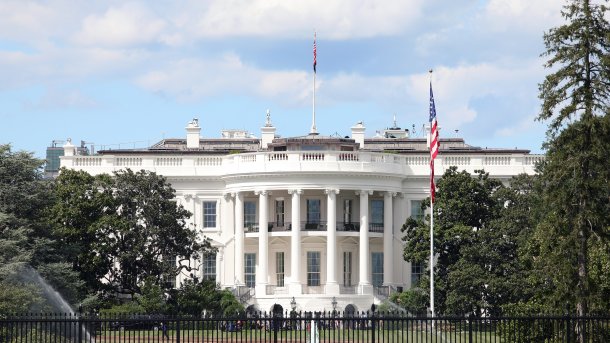
The White House dismissed several members of the National Science Board over the weekend. The members received a message stating that their term was being terminated “on behalf of President Donald Trump” with immediate effect, writes the Washington Post. Board member Keivan Stassun told the newspaper that he had personally received confirmation from about a third of the members. It is currently unclear how many members of the science board were actually dismissed and whether they will be replaced. The White House has not yet commented on the matter and has not given any reasons for the dismissals.
Videos by heise
Criticism from the Democratic camp was not long in coming. The leading Democrat on the Science Committee of the US House of Representatives, Zoe Lofgren, accused President Trump of further damaging science and American innovation. Some dismissed members have also commented. “I am deeply disappointed, although not really surprised,” said researcher Willie E. May to the New York Times. “With growing concern, I have followed the systematic dismantling of this administration's scientific advisory structures, and the National Science Board is merely the latest victim.”
US research under political pressure
The board was established in 1950 with the National Science Foundation (NSF), an independent US federal agency with an annual budget of around 9 billion US dollars, which promotes basic research and scientific infrastructure in the USA. The National Science Board directs the strategic orientation of the NSF, monitors scientific standards, approves research programs, and advises the President and Congress on science and research policy issues. Many technologies common today, such as MRI scanners, mobile communications, and LASIK eye surgery, are the result of research funded by the NSF.
The National Science Board consists of 24 members, who come from academia and industry scientists and engineers, as well as the NSF Director. They are appointed by the President for six-year terms. The director's office has been vacant for about a year after the previous director resigned. His withdrawal occurred during a period of significant political and financial uncertainty at the NSF: the President's budget proposal for 2026 envisioned a cut in the NSF budget by around 55 percent. However, Congress largely rejected this proposal. For 2027, the White House is again proposing deep cuts to the NSF.
Similar developments have recently occurred at other science-related institutions. Reports describe growing political pressure on research institutions. Experts warn of the long-term consequences for innovation and the international competitiveness of the USA if these developments continue.


(dmk)


