


Halt of Google fine? Serious accusations against von der Leyen
Reports of an intervention by EU Commission President von der Leyen cause outrage: civil society and the EU Parliament demand DMA enforcement.
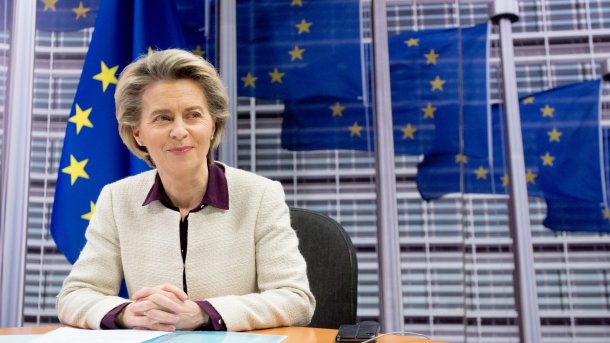
EU Commission President Ursula von der Leyen
(Image: EU-Kommission)
There is currently unrest in the corridors of the EU Commission. The trigger is the question whether Brussels' sharpest sword against the dominance of big tech corporations, the Digital Markets Act (DMA), has already become blunt before a major deployment. Reports from Handelsblatt and Capital Forum are shaking the credibility of European digital policy. According to these reports, Commission President Ursula von der Leyen is said to have intervened personally to stop a billion-euro fine against the US giant Google, which had already been planned, at the last minute.
Actually, the case seemed clear: In two extensive proceedings, the EU competition authorities had investigated whether Google was systematically violating the rules of the DMA to further cement its market-dominant position. According to the reports, the investigations were already concluded, the evidence was overwhelming, and the verdict was made: a fine in the billions was to be officially announced in March.
But instead of the expected fanfare, there was… nothing. The Commission President is now said to have suspended the sanctions indefinitely. This casts a long shadow over the independence of the Brussels government institution.
Warning calls from parliament and civil society
The background to the dispute are the far-reaching obligations that Google has had to fulfill as a “gatekeeper” under the DMA since 2023. The Commission already set the company a deadline of six months in January to make fundamental changes. For example, Google must remove technical hurdles for competitors' AI assistants on the Android operating system and make central search data accessible to competing search engine providers. The goal is to break up closed ecosystems and enable genuine competition. These demands put Google under pressure.
Videos by heise
The reaction from civil society to the reports about the halt of the fine was not long in coming. In an open letter published on Wednesday, 34 organizations from across Europe call on the Commission President to effectively enforce the DMA.
They see the hesitation not only as an individual failure but as a danger to the prestigious project of digital sovereignty. They are supported by over 20,000 citizens who have signed an online appeal. There is great concern that the law will become a toothless tiger before it can fully unfold its effect.
Just last week, the EU Parliament also sounded the alarm in a resolution. The MEPs clearly warn against external political pressure aimed at weakening the new competition rules. They demand: ongoing DMA proceedings must be concluded immediately and without political considerations. Proportionate fines are essential to ensure deterrence against rule violations. This is making the situation increasingly uncomfortable for von der Leyen.
Fatal signal to Silicon Valley
Experts like Felix Duffy from the organization LobbyControl see the incident as a fatal signal to the tech industry. If companies learn that violations of European law have no consequences when sufficient pressure is exerted on decision-makers, the EU will lose its most important leverage.
Duffy speaks of a digital dependency of the EU on the USA. He suspects that Brussels has caved in to Washington instead of defending its own democratic fundamental principles and the protection of citizens. Effective enforcement of the DMA is the only way to curb the influence of Big Tech.
Max Bank from Rebalance Now also sharply criticizes the implementation so far. He observes a worrying trend: proceedings are dragging on, decisions are being postponed, and sanctions are only being applied hesitantly. Google, meanwhile, complained in September 2025 that the DMA is causing damage to European users.
To ensure compliance with the requirements, the EU supervisory authority initiated additional “clarification proceedings” at the beginning of the year. While these are not yet new formal investigations, they represent a formalization of the regulatory dialogue. The authorities are specifically examining whether Google is treating competing AI software fairly. In mid-April, the Commission proposed that the company release search and Gemini data. At the end of the month, recommendations for more interoperability on Android followed.
Google lawyer Clare Kelly, on the other hand, argued that additional regulations, based more on competitor complaints than consumer interests, could endanger privacy and innovation. Teresa Ribera, as Vice-President of the EU Commission responsible for competition, attacked the Trump administration in the US in November. She stated that the US is putting massive pressure on the EU to weaken its tech rules.


(wpl)


