


Live and let play: The five best "James Bond" games
The world's most famous secret agent has had many interactive adventures over the past 40 years. We present five of the best.

Artwork from "007 Nightfire"
(Image: Electronic Arts)
James Bond, the man who hunts Dr. No in Her Majesty's Secret Service, lives only twice in a deadly mission and finds a Quantum of Solace in the face of death. He has been doing all this and much more in book, comic, film, and video game form for over 0070 years. In just a few days, a new game in the legendary series, “007 First Light”, will be released – a good reason to delve into the history of this very series and put five of the best games in the spotlight. Pardon, in the fireball.
Actually, Mr. Shaken-not-stirred has been hunting interactive villains since the 1982 text adventure “Shaken But Not Stirred”. But that was more of a fan project by solo developer Richard Shepherd. The first official Bond game didn't appear until almost two years later on then-current 8-bit systems like the Atari 2600 or C-64, was simply called “James Bond 007” and was a simple mix of shooter and platformer. Over the following decades, the games about the master spy naturally became more sophisticated and varied.
5th Place: James Bond 007: The Duel (1993)
Timothy Dalton's career as 007 was comparatively short, limited to only two films (“The Living Daylights,” 1987, and “Licence to Kill,” 1989), and was long over by 1993. At this point, there was still a Bond vacuum; Pierce Brosnan wouldn't take over the famous role for another two years. In that respect, it was not surprising that Mr. Dalton had to lend his distinctive face to “James Bond 007: The Duel” once again. Specifically, the one already known from the “Licence to Kill” film poster.
James Bond 007: The Duel (1993) (5 Bilder)

Paul Kautz
)This very game, developed by the mini-company “The Kremlin” (which essentially consisted of programmer/designer Paul Margrave and four graphic artists), distributed by Domark and released on Sega's Mega Drive, Master System, and Game Gear, is not a typical Bond shooter, but a captivating mix of action and exploration: As Bond, you run and jump through four levels, rescue kidnapped blondes and put a stop to the plans of the crazy Dr. Gravemar, while fending off familiar villains like Beisser or Oddjob with the good old Walther PPK.
4th Place: James Bond 007: Nightfire (2002)
In November 2002, “Die Another Day”, the last film in which Pierce Brosnan played James Bond, was released. At the same time, an official Bond game featuring his well-known agent face was also in stores – but unlike “GoldenEye” (1997), “Tomorrow Never Dies” (1999), and “The World Is Not Enough” (2000), it was not an official game for the film, but a standalone adventure called “James Bond 007: Nightfire”. Consequently, it has nothing to do with the film's plot, but tells its own story. However, this story, of course, does not deviate much from the usual Bond formula and revolves around the crazy industrialist Raphael Drake, who threatens humanity with nuclear weapons from his space station.
James Bond 007: Nightfire (2002) (5 Bilder)

Paul Kautz
)“Nightfire” offers an appealing mix for ten, sometimes very long, levels: plenty of first-person shooter action with a dozen powerful weapons. Interesting gadgets from the Q-Lab like the electric shock car key, the camera lighter, or the X-ray glasses with a selective Bond bonus. And even cooler vehicle levels, at least in the console versions (which are generally much more recommendable).
3rd Place: From Russia With Love (2005)
With “James Bond 007: Everything or Nothing”, released in 2004, Electronic Arts put a brilliant end to the Brosnan era: The shooter, developed by the internal team “EA Redwood Shores” (later renamed “Visceral Games”), abandoned the first-person perspective that dominated previous games and instead presented Mr. Bond from a third-person perspective, which staged the breathless action very attractively.
From Russia With Love (2005) (5 Bilder)

Paul Kautz
)Just one year later, the same system was used again to create a playable journey into the past – specifically back to 1963, to the second Bond film “From Russia With Love.” The game uses it as a basis for scenarios and characters, but significantly expands both over the course of the 14 levels (plus bonus sections). For example, there is now a new enemy organization (OCTOPUS instead of SPECTRE), the Aston Martin DB5 from the film “Goldfinger” (1964), or the jetpack from “Thunderball” (1965).
“From Russia With Love” (released on Xbox, PlayStation 2, GameCube, and PlayStation Portable) is once again a furious action fest, which also offers a rare bonus of authenticity with the newly recorded original voice of Sean Connery.

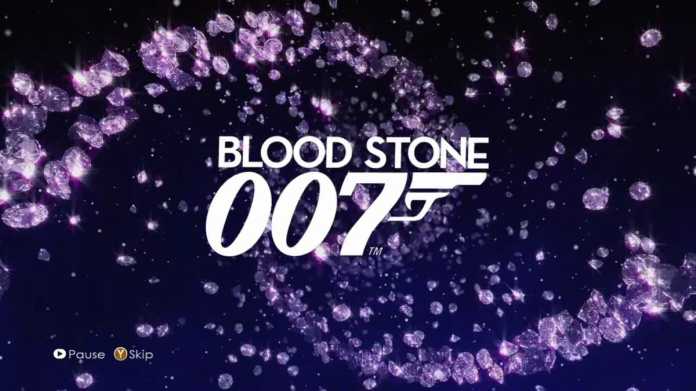
2nd Place: James Bond 007: Blood Stone (2010)
Although the first two Daniel Craig Bonds, “Casino Royale” (2006) and “Quantum of Solace” (2008), offered a lot of action, they didn't get their own games. Instead, the 2008 “Quantum of Solace” was a kind of mash-up that played between the two films and partly significantly expanded individual scenes from both. Not a bad game, but really not a good one either.
James Bond 007: Blood Stone (2010) (5 Bilder)
Paul Kautz
)This was followed in 2010 by “James Bond 007: Blood Stone”, which, however, was again not based on a film, but cooked its own soup. What was remarkable about this game was that it came from Bizarre Creations – a British development studio that was primarily known for its sometimes excellent racing games in the “Project Gotham Racing” series.
No wonder, then, that “Blood Stone” features some splendid driving scenes in various Aston Martin models. In addition, there is sometimes wonderfully brutal staged long- and close-range combat action, again presented from a third-person perspective and accompanied acoustically by some original Bond actors of the time, especially Daniel Craig and Judi Dench.
Videos by heise
1st Place: GoldenEye 007 (1997)
“GoldenEye 007” was unusual even at its original release: it was the official game for the film “GoldenEye”, Pierce Brosnan's debut as James Bond. However, this film was released in 1995, while the game only hit the shelves two years later. And then exclusively for the N64, Nintendo's family console with the bizarre trident controller. Market logic dictated that this game should have sunk like Beisser's dentures.
GoldenEye 007 (1997) (5 Bilder)

Paul Kautz
)There was a flaw in the logic. Because this game, developed by Rare in about two and a half years, was to become a megahit and one of the must-have titles for the N64, selling beyond eight million copies. This paved the way for the first-person shooter, which had largely been reserved for home computers until then, onto consoles – and redefining local multiplayer fun in children's rooms worldwide for all time. In most, at least. Because in Germany, the game was classified on March 18, 1998, by the then Federal Review Board for Media Harmful to Young Persons as “an extremely brutal game, the essential content of which consists of the detailed depiction of killing people,” which has a “brutalizing effect on children and adolescents” and must be withdrawn from the market. Which then happened directly and remained so until October 29, 2021.
Sure, the times when what was shown here was classified as “like real!” are long gone. And multiplayer rules like “Nobody looks at anyone else's screen! And nobody picks Oddjob!” no longer need to be established in the age of online battles. And yet, when playing today, almost 30 years after its original release, you can still feel why “GoldenEye 007” is still considered by most fans to be the best Bond game of all time. It simply has the Midas touch.


(nen)

