


AI Wearables: Qualcomm positions itself as a central technology partner
With Snapdragon START, Qualcomm aims to lay the foundation for an ecosystem of personal AI wearables. Smart Glasses are the first step.
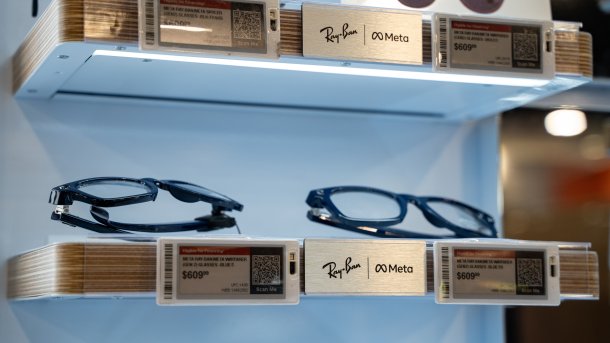
(Image: Erman Gunes / Shutterstock.com)
Qualcomm has announced Snapdragon START (Scalable Turnkey AI-Ready Toolkit). The program is intended to help companies bring their AI wearables to market faster and produce them on a larger scale. For this, the chip developer provides a toolkit of chipsets, software, reference designs, and manufacturing partners.
Smart Glasses are the first to be launched, followed later by other device classes such as AI-powered earbuds, watches, jewelry, pendants, and pins. According to Qualcomm CEO Cristiano Amon, the company currently has more than 40 designs for such devices. The range of possible form factors is very broad.
The program is divided into the areas of hardware, software, and scaling. Hardware includes compact modules based on current Snapdragon chipsets, while software covers the device itself as well as connectivity to smartphones and cloud services and can be configured for different AI systems. For scaling, Qualcomm relies on a network of manufacturing and technology partners as well as customizable white-label products.
Videos by heise
Qualcomm aims to establish itself early as a platform for AI wearables
Qualcomm is targeting smart glasses as the first product category. The company is showcasing reference designs in three classes: pure audio and camera glasses in the style of Ray-Ban Meta, as well as smart glasses with a monocular or binocular mini-display. British eyewear manufacturer Inspecs, which licenses brands such as Barbour, CAT, Superdry, and O’Neill, is the first exclusive partner within the Snapdragon START program. However, it is not known when the first smart glasses from this collaboration will come to market.
Qualcomm likely pursues two goals with this initiative: the company wants to standardize the development of personal AI wearables and position itself early as an important technology platform in an emerging hardware ecosystem. Qualcomm already plays a similar role in the smartphone market, especially with Android devices, where many manufacturers rely on Qualcomm's Snapdragon SoCs, modem technology, reference designs, and other platform components.
Qualcomm is already strongly represented in AI glasses: Snapdragon chips are used in most current models, including the Ray-Ban Meta glasses, which sell in the millions. It remains completely open how large the demand for other AI wearables will be.
On the same day, Qualcomm also introduced Snapdragon Reality Elite, a premium chipset for immersive computer glasses that is likely to shape not only VR devices in the coming years.


(mki)


