


Only two are good: ADAC tests pedelecs for beginners
The ADAC tested ten pedelecs under 2000 euros in various disciplines. Two of them were rated "good" and two were rated "poor".
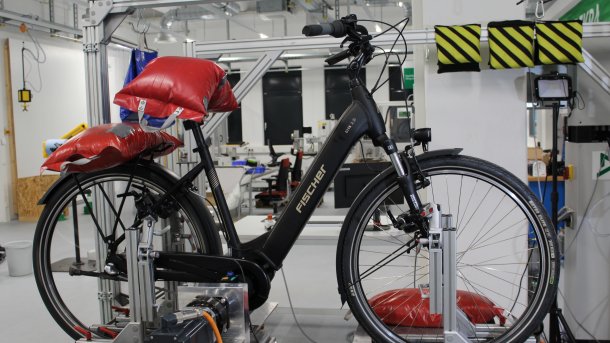
E-bike from Fischer in the ADAC test.
(Image: ADAC)
Two pedelecs under 2000 euros are "good": this is the verdict of the ADAC after testing a total of ten inexpensive e-bikes. Most of the test bikes are "satisfactory", only two received the grade "poor" in the test.
Both test winners received a score of 2.5. These were the Deruiz Quartz for 1400 euros and the Fischer Cita 2.2i for 1950 euros. The Deruiz bike impressed the ADAC with its powerful brakes and its range of 73 kilometers. The Fischer bike was the only candidate among the inexpensive pedelecs with a mid-motor, which according to the ADAC contributes to a pleasant ride. However, the automobile association would have liked a little more assistance at the highest level.

(Image: ADAC)
Two pedelecs from Grundig and Mokwheel came off much worse in the ADAC, both receiving a score of 5.0. This is due to the discovery of the plasticizer DEHP, which was found in the handle of the Mokwheel Mesa Lite ST 2.0 and in the saddle of the Grundig E-Citybike 28. In the ADAC evaluation system, this automatically means a school grade of 5 in the overall evaluation.
No top technology
All in all, the ADAC states that no cutting-edge technology can be expected from inexpensive entry-level pedelecs under 2000 euros. Nevertheless, the ADAC writes in a press release that buyers should be able to have expectations regarding drive, braking and battery performance. However, many of the bikes tested only have pedal sensors which, unlike torque sensors, do not allow for sensitive motor control. In addition, the motors are often loud and continue to run when you have already stopped pedaling.

Often, the running times of the bikes did not live up to the manufacturer's promises, and the charging times of some models were also a negative factor. The weight range of the pedelecs in the test was surprising: The Crivit was the lightest at 21 kilograms, while the heaviest bike came from Fischer and weighed 29 kilograms. Depending on your body weight, this could be relevant for the permissible total weight.


(dahe)

